A home inspector’s guide to identifying mismatched roof shingles in Kansas City homes, with costs, resale impact, and replacement timelines.
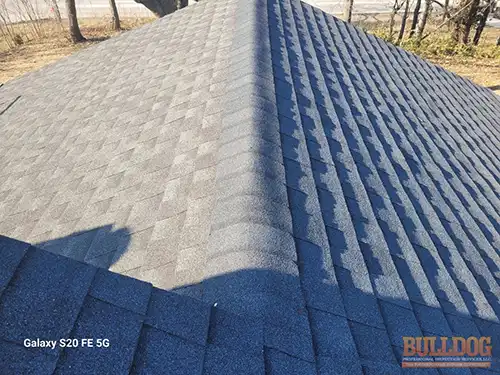
Monday morning during the roof inspection of an 81-year-old ranch in Kansas City’s Brookwood subdivision, I found two completely different roof sections.
The south side had weathered, granule-depleted shingles that were roughly 20 years old and needed replacement.
The north side had newer shingles in good condition, maybe 5 years old.
This wasn’t a repair situation where a small damaged area got patched.
This was a full half-roof replacement that left the property with mismatched sections aging at different rates.
The seller disclosed the home had been an investment property for years, but didn’t mention when or why only half the roof was replaced.
In Kansas City’s housing stock, I see this pattern in homes where landlords minimized repair costs by replacing only the most deteriorated sections.
The problem compounds over time as the remaining original section continues to age while the replaced section stays relatively new.
Understanding Mismatched Roof Shingles: What It Is and Why It Fails
Mismatched roof shingles occur when only part of a roof gets replaced while the rest remains in place, creating sections with different ages, conditions, and remaining lifespans on the same roof structure.
The replacement might happen because storm damage affected only one side, budget constraints limited full replacement, or a seller repaired the most visible deterioration before listing.
Whatever the reason, you end up with a roof where half the shingles might last another decade while the other half needs replacement within 2-3 years.
Sidenote: Professional home inspectors following InterNACHI Standards of Practice evaluate roof coverings from ground level or eaves, identifying observed material defects including mismatched shingles, improper installations, and age-related deterioration.
Common Causes
Partial replacement happens for three main reasons.
- Insurance claims for localized storm damage pay only for the affected area, leaving the rest of the aging roof in place.
- Landlords and flippers minimize expenses by replacing only the sections showing obvious failure.
- Sellers address visible deterioration on street-facing elevations while leaving less visible areas untouched.
How Shingles Age Differently
Shingles age based on sun exposure, ventilation, installation quality, and material composition.
South-facing sections in Kansas City receive more direct sunlight and heat, accelerating granule loss and brittleness.
North-facing sections stay cooler and retain granules longer, creating a 3-5 year lifespan difference even when installed simultaneously.
When you replace only one section, the age gap widens to 10, 15, or 20 years, making the mismatch permanent until full replacement.
Regional Factors in Kansas City
Kansas City’s clay-heavy soil and weather patterns affect roof performance.
Summer heat reaches 95-105°F, baking south-facing shingles and accelerating deterioration.
Winter freeze-thaw cycles stress old and new shingles differently because aged shingles lose flexibility while new shingles maintain elasticity.
Homes built between 1940-1970 often have inadequate attic ventilation, trapping heat and shortening shingle life on both original and replacement sections.
Here are the most common questions homebuyers ask about mismatched roof shingles:
What problems does a partial roof replacement cause for homebuyers?
Partial roof replacement creates problems for homebuyers by introducing structural inconsistency across the roof surface.
When only one section is replaced, the new shingles have different flexibility, expansion rates, and load-bearing characteristics than the older section, creating stress points at the junction where the two sections meet.
This structural mismatch can lead to premature failures at the seam, especially during extreme weather when thermal expansion and contraction rates differ between old and new materials.
Structural Inconsistency
The junction between old and new sections becomes a weak point.
Old shingles are brittle and inflexible after years of UV exposure and temperature cycling.
New shingles remain pliable and expand/contract more during temperature changes.
Where these two sections meet, the different movement rates create gaps, lifted edges, and eventual water infiltration paths that wouldn’t exist with uniform roofing.
Warranty Complications
Shingle manufacturers void warranties when you install new shingles adjacent to old ones.
The warranty requires proper installation over uniform decking with consistent underlayment and flashing systems.
Partial replacement compromises this uniformity because the old section has aged underlayment, potentially damaged decking, and oxidized flashing that doesn’t integrate properly with new materials.
You end up with zero warranty coverage on the new section because it doesn’t meet manufacturer specifications, and you’ve already lost coverage on the old section due to age.
Most buyers don’t discover this warranty gap until they experience a leak and file a claim, only to learn the entire installation is considered non-compliant.
The manufacturer’s position is straightforward: if you’re replacing shingles, you need to replace the entire roof to maintain warranty protection, and any partial work voids coverage across the entire structure.
How much does it cost to replace mismatched roof shingles?
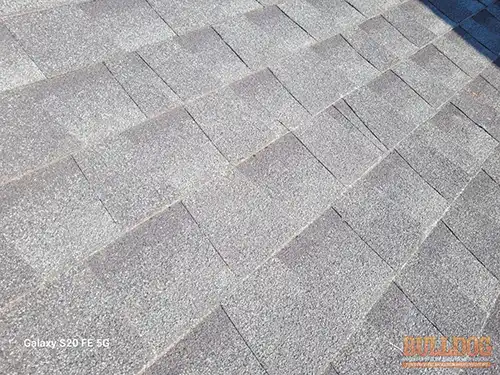
The cost to replace mismatched roof shingles in Kansas City depends on whether you replace the entire roof or just the older section.
Full roof replacement on a standard 2,000-square-foot home costs $7,000-$24,500 depending on shingle quality and roof complexity.
Partial replacement of just the older section costs $3,500-$8,000, but this perpetuates the mismatch problem and creates additional long-term costs.
Cost Breakdown
Three-tab shingles for full replacement run $7,000-$12,000 installed (2,000 sq ft roof).
Architectural shingles cost $12,000-$18,000 for the same coverage.
Premium architectural or designer shingles reach $18,000-$24,500 with enhanced warranties and aesthetics.
Partial replacement costs roughly half these amounts ($3,500-$8,000), but you’re left with mismatched sections and no warranty coverage on either the new or old areas.
The math seems favorable initially, but within 3-5 years you’ll need to replace the remaining old section anyway, bringing total costs to $7,000-$16,000 spread across two separate projects instead of one comprehensive replacement.
Hidden Costs
Partial replacement reveals hidden costs once work begins.
Decking repairs add $500-$2,000 when contractors discover rotted plywood under the old section.
Ventilation upgrades cost $300-$800 if the attic lacks proper intake and exhaust venting.
Flashing replacement runs $200-$600 for valleys, chimneys, and wall intersections where old and new sections meet.
Kansas City permits cost $75-$150 depending on project scope and jurisdiction.
Most contractors won’t warranty partial work because they can’t control how the old section performs or how the junction between sections weathers over time, eliminating your protection if problems develop.
Can mismatched shingles affect home resale value?
Mismatched shingles reduce home resale value by 3-8% compared to homes with uniform roofing.
In Kansas City’s housing market, this translates to $6,000-$16,000 in lost value on a $200,000 home.
The visual inconsistency signals deferred maintenance to potential buyers, creating the perception that other systems may also have been neglected.
Financial Impact on Home Sale
Appraisers note mismatched roofing in their reports and adjust comparable sales values downward.
The adjustment accounts for both the aesthetic concern and the fact that buyers will face near-term replacement costs for the older section.
Homes with mismatched roofs stay on the market 15-30 days longer than comparable properties with uniform roofing, forcing price reductions to generate offers.
Buyers typically request one of three concessions: full roof replacement before closing, a credit equal to replacement costs ($7,000-$12,000), or a purchase price reduction of 5-10% to cover both replacement and their perceived risk.
FHA and VA loans sometimes require full roof replacement before closing if the older section shows granule loss exceeding 25% or has visible curling, cupping, or missing shingles, eliminating financing options and shrinking your buyer pool.
The combination of longer market time, financing restrictions, and buyer negotiations often costs sellers more than proactive replacement would have cost before listing.
Should you replace the entire roof if shingles don’t match?
You should replace the entire roof when shingles don’t match if the age gap between sections exceeds 5-7 years or if the older section shows visible deterioration.
Full replacement eliminates structural inconsistency, provides uniform warranty coverage, and maximizes resale value.
While partial replacement costs less initially, the long-term costs often exceed the savings.
When Full Replacement Makes Sense
Replace the entire roof when the older section has lost 25% or more of its surface granules.
Granule loss exposes the asphalt coating to UV damage, accelerating deterioration and reducing waterproofing effectiveness.
Replace when the older section shows curling, cupping, or brittleness that causes shingles to crack when you apply light pressure.
These are terminal failure indicators that mean the section will develop leaks within 1-2 years regardless of the newer section’s condition.
Replace when you’re selling the home and want to avoid negotiations, appraisal issues, and extended market time that cost more than replacement.
Replace when you’re refinancing and the lender’s inspection flags the mismatched sections as a condition requiring correction before loan approval.
The $7,000-$24,500 investment in full replacement protects your equity, maintains financing eligibility, and prevents emergency repairs during winter when contractors charge premium rates and material costs increase 15-20%.
Will insurance cover roof replacement for mismatched shingles?
Insurance rarely covers roof replacement for mismatched shingles unless the mismatch resulted from storm damage that triggered a partial replacement under a previous claim.
Standard homeowners insurance policies cover only sudden, accidental damage from covered perils like wind, hail, and fire, not age-related wear, aesthetic concerns, or pre-existing conditions like mismatched sections from previous partial replacements.
Policy Coverage Limitations
Homeowners policies distinguish between covered perils and maintenance issues.
Wind damage that tears off shingles is covered.
Hail damage that cracks or punctures shingles is covered.
Age-related deterioration, granule loss, and cosmetic mismatches are not covered because these result from normal wear over time rather than sudden damage events.
If you file a claim for storm damage and the adjuster determines only one section needs replacement, the insurance company pays only for that section, creating or perpetuating the mismatch problem.
Some policies include “matching” provisions that require insurers to replace additional undamaged areas when they can’t match the color or style of discontinued shingles, but adjusters interpret these provisions narrowly and often argue that similar (not identical) shingles satisfy the matching requirement.
Deductibles typically run $500-$2,500, meaning minor storm damage that affects only a few shingles won’t generate enough repair costs to exceed your deductible, leaving you to pay out-of-pocket and perpetuate the mismatch if you choose partial repair.
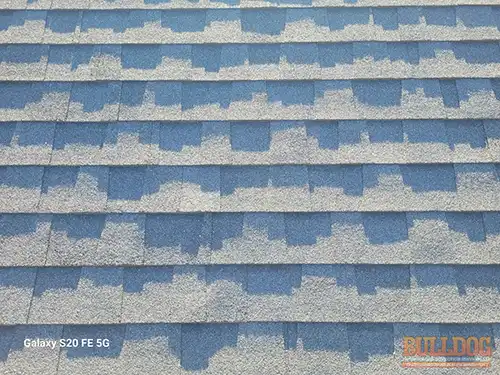
Mismatched roof shingles in Kansas City ranch homes aren’t isolated problems.
They’re common in homes built between 1940-1970 where landlords minimized expenses by replacing only the most deteriorated sections.
Understanding how partial replacement affects structural performance, warranty coverage, and resale value helps you negotiate fairly and avoid emergency repairs after closing.
The older section will fail within 2-5 years regardless of the newer section’s condition.
Full replacement costs $7,000-$24,500 but eliminates the mismatch, provides warranty coverage, and preserves resale value, while partial replacement saves $3,500-$8,000 initially but leads to higher total costs when you address the remaining old section later.
About the Author
Steve Rodriguez is a professional home inspector and the owner of Bulldog Professional Inspection Services. He performs more than 600 home inspections annually all across the KC metro area.
Based in: Raymore, MO
Service Areas: Belton, Raymore, Harrisonville, Grandview, Lee’s Summit, Blue Springs, Raytown, Independence, Liberty, Kansas City, MO, Kansas City, KS, Olathe, Leawood, Overland Park, Prairie Village, Shawnee, Lenexa
Certifications: Certified Master Inspector® (CMI). International Association of Certified Home Inspectors (InterNACHI) Certified Professional Inspector since 2004.
This article is based on a real inspection conducted in December 2025. The property address has been excluded for privacy. Cost estimates reflect Kansas City metro area pricing as of December 2025 and may vary based on specific conditions and contractor selection.
Helpful Links
- Check out our GBP post about this lesson
- Recent inspections in Kansas City, MO
- Home inspection lessons found in other Kansas City, MO homes
- Learn about the different roof types around the Kansas City Metro
Schedule Your Home Inspection
Call: (816) 564-3081
Email: info@bulldoginspect.com
Schedule Your Inspection Online