


A home inspector’s findings on service entrance cables in Raytown homes, with repair costs and safety warnings
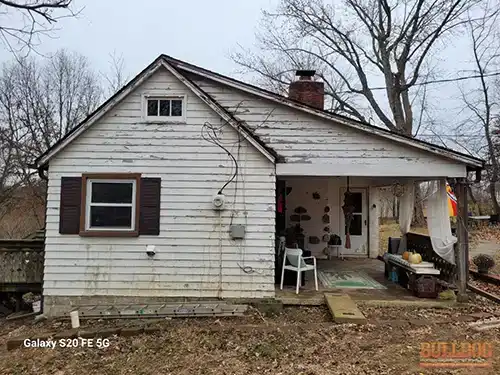
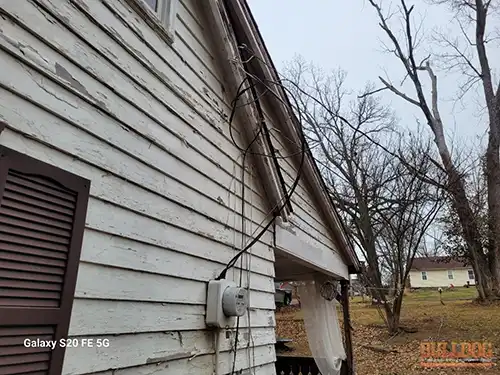
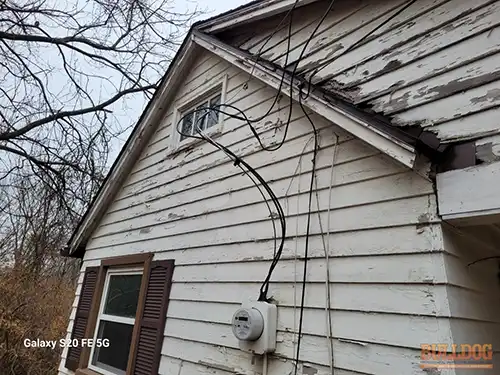
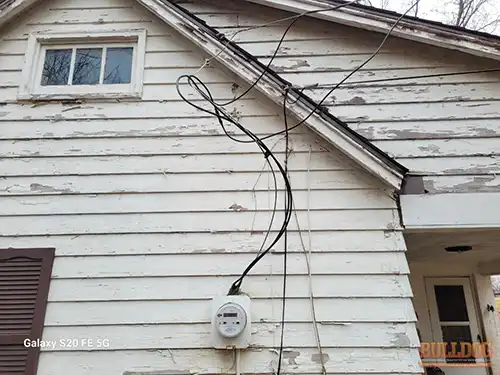
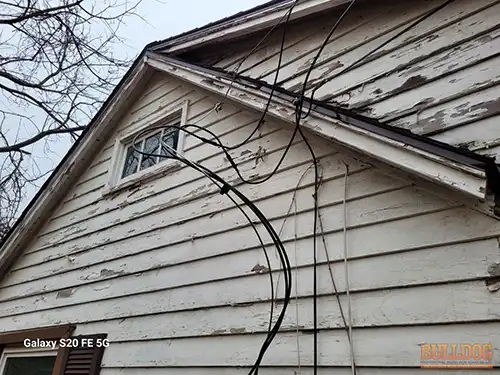
Tuesday morning during the electrical inspection of an occupied 73-year-old ranch-style home in the Military Heights subdivision of Raytown, I found that the overhead service entrance cables had pulled loose from the siding.
The cables were still carrying power to the house, but the mounting hardware had failed and left the conductors sagging away from the wall where they should be secured.
This isn’t something you can ignore or delay fixing. Loose service cables create immediate safety hazards and liability issues for property owners. The cables carry 120 to 240 volts from the utility pole to your meter, and when they’re not properly secured, wind stress and weather exposure accelerate damage that can lead to fires or electrocution risks.
The service entrance cables at this Raytown property had pulled away from their mounting points on the exterior wall, leaving several inches of gap between the cable assembly and the siding. The attachment hardware showed signs of rust and deterioration, which likely contributed to the failure. Wind stress on the overhead drop wires had worked the mounting screws loose over time until they pulled free completely.
Service entrance cables need solid attachment to structural members, not just siding or trim boards. When installation misses studs or blocking, constant vibration from wind gradually loosens the connection. The weight of the overhead drop creates continuous downward and outward pull on mounting points, and without proper backing, hardware eventually fails.
Loose cables create multiple hazards:
- When conductors sag or move freely, insulation can rub against rough surfaces and wear through to expose live wires.
- If cables contact metal components like gutters or siding, the entire surface becomes energized.
- Water infiltration into damaged insulation causes corrosion that travels down the conductors into the meter base and main panel, creating fire risks from loose connections and heat buildup.
The cables at this property were still delivering power, which meant the conductors inside hadn’t separated yet. But the compromised attachment put stress on connections that could fail suddenly during the next windstorm. The longer loose cables go unrepaired, the worse the damage gets as weather keeps working on weakened attachment points and compromised insulation.
Understanding Service Entrance Cable Systems
How Service Entrance Cables Connect to Your House
Your service entrance cables start at the weatherhead where utility drop wires connect to your electrical system. From that connection point, cables run down the exterior wall through a service mast or conduit to your meter base. The meter base houses your electric meter, and from there, cables continue into your main electrical panel inside the house.
Proper installation requires mounting the weatherhead and cable assembly to structural members with heavy-duty brackets and lag bolts. The attachment points need to handle not just the weight of the cables but also lateral forces from wind pulling on the overhead drop wires. Building codes specify minimum attachment requirements, but older installations often don’t meet current standards.
The service drop wires from the utility pole create constant tension on your attachment points. When mounting hardware loosens or fails, that tension pulls cables away from the wall and puts stress on conductor connections inside the weatherhead and meter base.
What Makes Service Cables Pull Loose
Weather creates the primary force that works against cable mounting systems:
- High winds generate lateral pressure on overhead service drops, transferring force directly to where cables attach to your house.
- Ice accumulation adds weight that pulls down on sagging conductors.
- Wind-blown debris and falling branches can strike the service drop hard enough to tear mounting hardware from siding.
Temperature cycling causes expansion and contraction in both metal brackets and cable assemblies. Over years of freeze-thaw cycles, this movement gradually loosens fasteners. Moisture accelerates the process when it penetrates around mounting points and corrodes metal hardware. Rust weakens brackets until they can’t hold against normal wind stress.
Improper installation creates failure points from the start. When contractors secure cables only to fascia boards or vinyl siding without hitting structural backing, vibration and weather stress loosen the connection quickly. Missing a stud by even an inch means screws grip only thin sheathing that can’t support the load. The cables sag lower than designed, creating additional leverage that works fasteners loose.
Why Loose Cables Are Dangerous
Electrical conductors inside service cables carry the full power supply for your entire house. When cables pull loose and sag, the conductors inside bend and flex in ways they’re not designed to handle. This mechanical stress can crack insulation or break conductor strands, creating points of high resistance that generate heat.
If damaged cables rest on your roof or rub against siding, constant movement wears through the protective jacket to expose live conductors. Anyone touching these exposed wires risks a potentially fatal shock from 120 to 240 volts. When damaged cables contact metal building components, the entire surface becomes electrically charged.
Water infiltration creates progressive damage you can’t see from outside. Moisture wicks down exposed conductors into the meter base and main panel, causing corrosion at connection points. Corroded connections develop high resistance that generates heat, potentially starting fires inside enclosed electrical boxes where they can smolder undetected.
The risk escalates during storms when additional wind or ice load can bring down the entire service mast, leaving live wires across your property. Even if loose cables continue supplying power without obvious problems, the unstable condition can fail catastrophically without warning.
Here’s what Raytown homeowners need to know about service entrance cable failures:
What causes service entrance cables to pull away from houses?
Service entrance cables pull away from houses due to:
- Weather stress
- Aging hardware
- Inadequate mounting.
High winds put enormous lateral force on overhead service drop wires, transferring stress directly to where cables attach to your house. During storms, wind-blown debris, falling tree branches, and ice accumulation can hit the service drop or pull on cables with enough force to tear mounting hardware right out of the siding.
Attachment hardware fails from improper installation or deterioration over time. Many older homes have service cables secured only to fascia boards or vinyl siding instead of solid structural members. When mounting screws or lag bolts miss studs or blocking, constant vibration and wind stress eventually loosen the connection until hardware pulls free.
Metal mounting brackets can rust and weaken, especially in the corrosive environment created by moisture that wicks into the cable assembly. The weight of service drop wires creates constant downward and outward pull on attachment points, gradually working screws loose from wood sheathing. Extreme temperature swings cause expansion and contraction in both cables and mounting hardware, slowly degrading connection strength.
Service entrance cables can become brittle and heavy with age, especially when the outer jacket deteriorates from decades of UV exposure. The cables can sag lower than designed, creating additional stress on mounting points. Ground settlement or shifting can also pull on underground portions of service entrance systems, transferring stress upward to where cables attach to the house. Animals occasionally contribute when squirrels or raccoons use service cables as pathways and physically disturb mounting hardware.
Is a loose service entrance cable dangerous?
Loose service entrance cables create significant safety hazards. The severity depends on how loose they are and what part of the electrical system is compromised.
When service entrance cables pull away from mounting points, the conductors inside can stress, bend, or damage enough to create fire and electrocution risks. If cables sag or rest on your roof, constant rubbing wears through the insulation jacket and exposes live conductors carrying 120 to 240 volts. Anyone touching these exposed wires risks a potentially fatal electrical shock.
If damaged cables contact metal components like:
- Aluminum siding
- Rain gutters
- Metal roofing
…the entire surface becomes electrically charged and dangerous to touch. The cables overheat when conductors bend or connections loosen, potentially igniting nearby combustible materials like wood siding or roofing.
Water infiltration into damaged cable insulation creates serious hazards. Moisture wicks down the conductors into the meter base or main panel, causing corrosion that leads to loose connections. Loose electrical connections generate heat through increased resistance and can start fires inside electrical boxes where you can’t see them developing.
In winter climates, loose cables create another danger when ice and snow load pulls them down further, potentially bringing the entire service mast down and leaving live wires lying across your yard or driveway. The electrical fault created when damaged conductors short together can be explosive, throwing shrapnel and starting fires immediately. Even if loose cables are still providing power to your home without obvious problems, the compromised connection creates an unstable situation that can fail catastrophically at any moment.
The longer loose cables go unrepaired, the worse the damage gets as wind, weather, and stress keep working on weakened attachment points and compromised insulation. If you notice loose service entrance cables, contact your utility company immediately and avoid touching anything near the affected cables.
Can service entrance cable insulation be repaired, or does the entire cable need replacement?
Electricians and inspectors overwhelmingly recommend replacing service entrance cables rather than repairing damaged insulation.
Specialized repair tapes exist for cable jacket damage, but using them on service entrance cables creates liability issues and rarely meets electrical code requirements.
Visible exterior damage almost always indicates more serious internal problems you can’t see from outside. When cable insulation cracks or wears through from UV exposure, moisture has probably penetrated between conductors and started corroding connections inside the meter base or panel. Water that wicks into damaged cable travels along the conductors, spreading corrosion far beyond the visible damage point.
Repair tape might seal the outside, but it doesn’t fix internal moisture damage or conductor corrosion. Service entrance cables carry the full electrical load for your entire house. They’re far more critical than branch circuit wiring where repair might be acceptable.
Service entrance cable failure means:
- Total power loss
- Electrical fires
- Electrocution hazards
Any compromise in integrity is unacceptable. Most electrical codes and inspectors require replacement of service entrance cables with damaged insulation rather than accepting field repairs.
The cable jacket provides essential protection against:
- Moisture
- UV damage
- Physical contact with live conductors.
Once compromised, it can’t reliably provide that protection even with repair attempts. Some electricians suggest that minor surface cracks might be sealed temporarily with paint or listed repair products, but this is only a stopgap measure until proper replacement can be scheduled.
If you’re selling a home, a home inspector will flag damaged service entrance cable insulation as a significant defect that requires correction before closing. The cost difference between attempting repairs and proper replacement is relatively small. Replacement provides decades of reliable service while repairs create ongoing liability. When service entrance cables show deterioration, it typically indicates the entire assembly has reached the end of its service life and should be upgraded to current code standards.
Who is responsible for repairing service entrance cables that pull loose from the house?
Responsibility for repairing loose service entrance cables depends on where the damage occurs along the electrical service path.
The utility company owns and maintains components from the transformer and power lines up to the connection point at your weatherhead or service mast. This includes the overhead drop wires that run from the pole to your house.
Homeowners handle everything on their side of that connection point:
- Mounting hardware
- Weatherhead
- Service mast
- Conduit
- Cables running down to the meter and beyond
The meter belongs to the utility company, but the meter base that houses it is your responsibility. When cables pull loose from failed mounting brackets or deteriorated attachment points, the repair falls on you.
Confusion happens because utility companies have different policies about free repairs. Some utilities will reattach cables to new mounting hardware if you install it, while others require you to hire a licensed electrician to handle everything on your side of the connection. Call your utility company first and describe what happened. They’ll tell you whether they can help or if you need to hire an electrician.
If storm damage to the utility’s drop wires pulled your cables loose, they’ll handle the overhead reconnection once you fix your mounting hardware. Even if the utility company caused the damage, you still handle repairs to hardware attached to your house. Responsibility splits at the weatherhead connection point – everything below belongs to you.
How much does it cost to repair or replace loose service entrance cables?
Repair and replacement costs for loose service entrance cables vary significantly based on damage extent and what needs fixing.
Simple reattachment of cables that pulled loose from mounting hardware typically costs between $225 and $500 if only the attachment point needs repair. The cables themselves need to be undamaged – just needing new mounting brackets or hardware.
If the service entrance cables suffered damage when they pulled loose, full replacement costs range from $1,500 to $2,000 for a standard overhead service.
This price includes:
- New cables
- Weatherhead
- Meter base (if needed)
- Professional installation
Cable materials run $1.50 to $15 per linear foot depending on gauge and type. Most homes need 10 to 15 feet.
Labor charges from licensed electricians average $50 to $100 per hour, with most reattachment jobs taking one to two hours. Full replacement projects take considerably longer due to coordinating utility disconnection, removing old equipment, and installing new code-compliant components.
If you’re upgrading your electrical service at the same time, like going from 100 amp to 200 amp service, expect costs to increase to $1,300 to $3,000 or higher. The upgrade is worth doing if your cables need replacement anyway – you’re paying for the labor either way. Some utility companies will reattach cables to new mounting hardware at no charge if you install the hardware yourself, though policies vary widely by location.
You might also pay for:
- Building permits
- Electrical inspections
- Repairs to siding or structural components where cables attach.
- Get three quotes from licensed electricians who can assess your situation and provide firm pricing
The loose service entrance cables I found at this Raytown property needed immediate attention. I documented the failed mounting hardware and compromised cable position in my inspection report with recommendations for urgent repair by a licensed electrician.
Service entrance cable failures don’t fix themselves. The longer they go unaddressed, the more damage wind and weather cause to both the cables and mounting points.
What starts as loose hardware can progress to:
- Damaged insulation
- Corroded connections
- Serious fire or electrocution hazards
If you notice cables pulling away from your house or sagging lower than normal, contact your utility company immediately to report the condition. They’ll tell you whether they need to disconnect service before repairs. Don’t attempt to reattach cables yourself. The conductors carry full household voltage and require professional handling.
Licensed electricians can assess whether simple reattachment is sufficient or if cable replacement is necessary. The investment in proper repairs protects your property value and eliminates liability from a known electrical hazard. For Raytown homeowners scheduling pre-purchase inspections, electrical service condition is one of the critical systems we evaluate for safety and code compliance.
About the Author
Steve Rodriguez is a professional home inspector and the owner of Bulldog Professional Inspection Services. He performs more than 600 home inspections annually all across the KC metro area.
Based in: Raymore, MO
Service Areas: Belton, Raymore, Harrisonville, Grandview, Lee’s Summit, Blue Springs, Raytown, Independence, Liberty, Kansas City, MO, Kansas City, KS, Olathe, Leawood, Overland Park, Prairie Village, Shawnee, Lenexa
Certifications: Certified Master Inspector® (CMI). International Association of Certified Home Inspectors (InterNACHI) Certified Professional Inspector since 2004.
This article is based on a real inspection conducted in December 2024. The property address has been excluded for privacy. Cost estimates reflect Kansas City metro area pricing as of December 2024 and may vary based on specific conditions and contractor selection.
Helpful Links
- Check out our GBP post about this lesson
- Recent inspections in Raytown, MO
- Home inspection lessons found in other Raytown, MO homes
- Learn more about your electrical system in the Raytown area
Schedule Your Home Inspection
Call: (816) 564-3081
Email: info@bulldoginspect.com
Schedule Your Inspection Online