A home inspector’s report on a radon mitigation system violation in Olathe home, with safety warnings and repair guidance
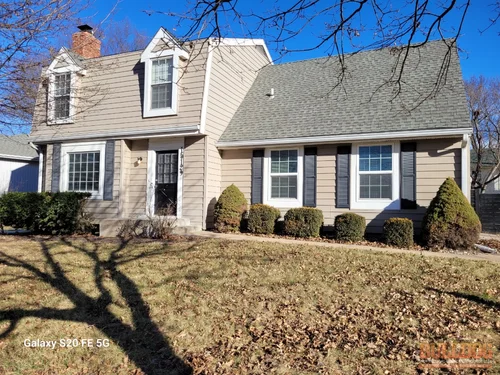
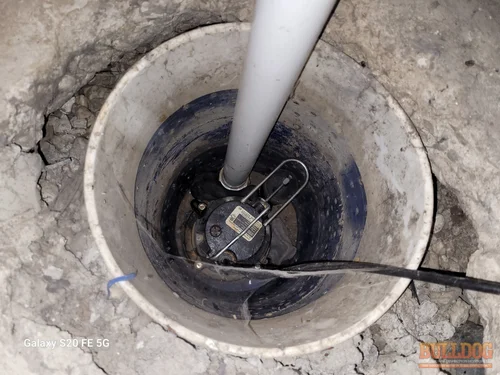
Last Wednesday morning during the home inspection of a vacant 50-year-old 2-story home in the Brougham Village subdivision of Olathe, I found a radon mitigation system installed and running, but the sump pit was uncovered and unsealed.
The home had a sump pump, which is common in this area, but the pit itself was sitting open without a sealed cover.
That’s a problem because an uncovered sump pit creates a direct pathway for radon gas to enter the home, completely defeating the purpose of the radon mitigation system.
The system can’t work properly if there’s an unsealed opening in the basement floor allowing gas to bypass the mitigation efforts.
This violates radon mitigation system installation requirements and leaves the homebuyer exposed to elevated radon levels even with the system running.
This means an unsealed sump pit undermines the entire radon mitigation system.
When a radon mitigation system is installed in a home with a sump pump, the sump pit must be sealed with an airtight cover to prevent radon gas from entering through that opening.
In this Olathe home, the sump pit was left completely uncovered, creating a direct pathway for soil gases to bypass the mitigation system and enter the living space.
Radon mitigation systems work by creating negative pressure beneath the foundation slab and venting gases to the exterior before they can enter the home.
An uncovered sump pit breaks that sealed envelope and allows radon to flow freely into the basement through the open pit, rendering the mitigation system ineffective.
This is a common oversight during radon mitigation system installations, particularly in older homes where sump pumps were added years after the original construction.
The fix is straightforward but critical for the system to function properly.
Without a properly sealed sump pit cover, radon testing after installation would likely show elevated levels despite the presence of an active mitigation system, leaving occupants exposed to health risks the system was specifically installed to eliminate.
Let’s talk about the most common questions people have about radon mitigation systems.
Is radon mitigation worth it?
Radon mitigation is absolutely worth it when you’re dealing with elevated radon levels.
According to EPA’s October 2025 cost-benefit analysis, radon mitigation returns $7.38–$15.27 for every dollar invested in existing homes, and up to $53.80 per dollar invested in new construction with radon-reducing features..
Here’s the reality I see in Olathe and the surrounding metro:
- Radon kills around 21,000 Americans every year
- It’s the second leading cause of lung cancer behind smoking
- It’s the leading cause of lung cancer for non-smokers
When you get radon testing done and find levels above 4 picocuries per liter (pCi/L), you’re looking at a real health risk that compounds over time. Kids, elderly family members, anyone spending significant time in lower levels of their Olathe home are all getting exposed.
A properly installed radon mitigation system can reduce those levels by up to 99% (cite source) and is backed by documented results across thousands of installations.
The system runs 24/7, continuously pulling radon from beneath your foundation and venting it safely above your roofline before it ever enters your living spaces.
In terms of cost, we’re talking about $750 to $1,000 for professional installation in most Olathe homes, a relatively low number when compared to other essential Olathe home repairs you’d make.
Monthly operating costs of a radon mitigation system run about $5-10 for electricity, roughly the same as leaving a bathroom exhaust fan running continuously and the fan itself typically lasts ten years or more before needing replacement.
Beyond the health protection, there’s a property value angle too.
Homes in high radon areas (i.e. the entire city of Olathe) tend to see better buyer response when there’s already a radon mitigation system installed. That’s because the problem isn’t being hidden. Since it’s widely known and understood, it’s no longer a surprise to Olathe home shoppers. What’s important is that you’ve already found it and solved it so they don’t have to.
This can help Olathe homebuyers breathe easy (pardon the pun) because radon gas isn’t always about the dollar costs. It’s about the peace of mind knowing your family isn’t breathing radioactive gas day after day.
Once radon testing confirms you have a problem, mitigation becomes a health necessity that happens to also make strong financial sense.
How does a radon mitigation system get installed?

After radon testing is performed and the results are deemed to be high, a radon mitigation system gets installed through a carefully planned series of specific steps that typically take 3-5 hours to complete in most Olathe homes.
The process starts with the radon mitigation system installation contractor doing a walkthrough to assess your foundation type and determine the best suction point location.
For Olathe homes with a basement, they’re looking at where to drill through the concrete slab. For Olathe homes with a crawlspace, they’ll plan where to install the vapor barrier and pipe penetrations.
Once the plan is set, installation begins with drilling a 4-5 inch diameter hole through your basement floor or slab.
Inside that hole, the contractor digs out a small pit in the gravel or soil beneath your foundation. This pit becomes the collection point where radon concentrates before getting pulled up through the system.
Next comes the PVC piping installation.
The pipe runs from that basement suction point all the way up through your Olathe home to above your roofline. Some contractors route it through interior spaces like closets, attics, and utility areas. Others run it outside and up the exterior wall. Interior routing tends to be more aesthetically clean, but exterior systems work fine too.
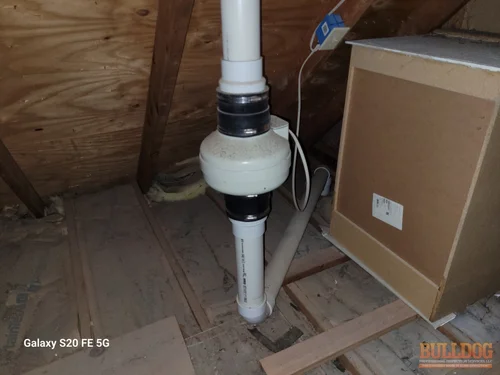
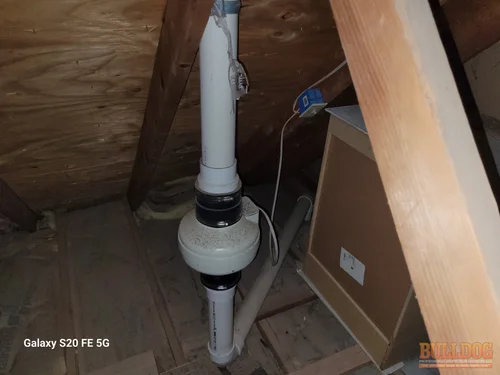
The radon fan gets mounted somewhere along that pipe route.
Usually in an attic, garage, basement, or outside the Olathe home. This fan runs continuously, creating negative pressure beneath your foundation that pulls radon from the soil and vents it safely above your roof.
During installation, the contractor also seals any visible foundation cracks and gaps around the suction point.
This helps the system work more efficiently by allowing all air trapped beneath grade level to be suctioned and removed by the home’s radon mitigation system.
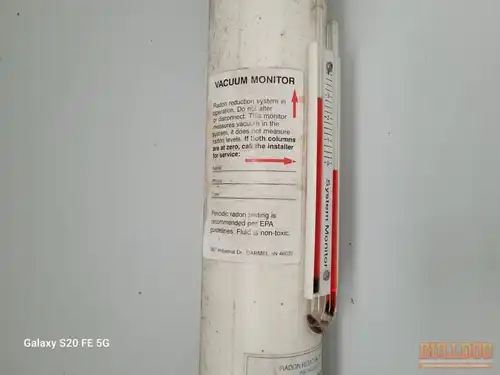
The radon mitigation system gets capped off with a manometer (or U-tube), which is basically a small U-shaped tube filled with colored fluid that shows you the system is creating proper suction. The purpose of the u-tube is to allow you to confirm the radon fan is working at a glance. You do this by making sure both sides of the manometer DO NOT line up.
After installation is finished, you should wait at least 24 hours before doing any post-installation radon testing to verify the system brought the radon levels down.
Most professionally installed systems in Olathe reduce radon levels by 90-99% when operating properly.
The entire installation in the average sized single-family Olathe home typically runs 3-5 hours start to finish, though larger Olathe homes or complex layouts can push that to a full day.
Radon mitigation system contractors handle all the electrical work to power the fan, which does not require a permit to be pulled in Olathe.
Can I install a radon mitigation system myself?
You can install a radon mitigation system yourself if you have solid construction skills and the right equipment, but I don’t recommend it for most Olathe homeowners.
DIY installation can save around $200 in labor costs compared to professional installation.
The materials themselves run about $200-$700 for:
- PVC pipe ($50-$200)
- Radon fan ($100-$350)
- Manometer ($15-$50)
- Sealants ($15-$60)
If you’re handy with a rotary hammer drill, comfortable working with PVC, and can handle basic electrical connections, the mechanical process isn’t overly complicated.
Here’s where it gets tricky: The most common mistake I see with DIY radon systems is installing the fan in the wrong location.
Building codes require the fan to be in a non-living area – attic, garage, basement, or outside. If you mount it in your basement and there’s a leak above the fan, you’re pumping concentrated radon directly into your living space.
Another frequent problem is installing the fan upside down.
Sounds obvious, but when you’re working in a dark, hot attic or freezing crawl space, it happens more than you’d think. An upside-down fan pushes air under your slab instead of pulling it out, which forces radon up into your Olathe home rather than venting it outside.
Choosing the wrong fan capacity is another issue that requires diagnostic knowledge.
Installing a GP501 fan on gravel when you need an RP145 on clay soil can burn out the fan prematurely or fail to reduce radon levels at all. Professional radon mitigation system contractors use diagnostic testing equipment to determine proper fan sizing based on your specific soil conditions.
There’s also backdrafting risk.
A radon system creates negative pressure beneath your foundation. If not designed correctly, that same pressure differential can pull carbon monoxide from your furnace or water heater flue back into your living spaces.
Professional radon mitigation system installers have equipment to test for this (most DIYers don’t).
Post-installation radon testing now becomes critical with DIY systems.
If your levels don’t drop below 4 pCi/L after installation, you’ll need to troubleshoot why:
- Wrong fan
- Insufficient suction
- Hidden radon entry points
- Poor sealing.
That diagnostic work requires expensive equipment and experience that comes from installing dozens of radon mitigation systems.
Lastly, there’s a resale consideration for Olathe homeowners.
When you sell, buyers typically want to see that the radon mitigation system was professionally installed by a licensed radon mitigation system contractor. A DIY system may trigger requests for professional reinstallation or scare buyers away entirely.
If you do decide to go the DIY radon mitigation system route, don’t skip post-installation radon testing: it’s the only way to confirm your system actually works.
What is the cheapest way to mitigate radon?
The cheapest way to mitigate radon in your Olathe home is a DIY installation of a sub-slab depressurization radon mitigation system, which costs around $500-$700 in materials compared to $750-$1,000 for professional installation in Olathe.
You’ll need:
- Radon fan ($100-$350)
- PVC piping ($50-$200)
- Manometer ($15-$50)
- Sealants ($15-$60)
Along with the right tools and right experience.
The downside is that DIY systems fail more often than professional installations:
- Wrong fan sizing
- Improper sealing
- Wrong location
- Installation mistakes
These can actually increase radon levels instead of reducing them. Then you’re paying twice: once for materials and again for a professional radon mitigation system contractor to fix it.
Here’s what doesn’t work as a DIY radon reduction approach: just sealing the cracks.
DIY guides promote ONLY sealing foundation cracks as an uber budget option. You can buy repair kits for $150-$300 and seal every visible crack in your basement. The problem is that, according to EPA studies (cite source), sealing below grade foundation cracks in-and-of-themselves has not been proven to reduce radon levels by significant amounts in Olathe homes.
Radon enters through microscopic openings you can’t see, not just visible cracks.
And even when they’re sealed, future settling reopens these cracks and creates new pathways. This means you’ll spend money without actually fixing the problem.
However, sealing open foundation cracks does add value when done correctly alongside a properly installed radon mitigation system.
It improves the system’s efficiency by reducing the amount of underground air that gets pulled through your foundation. But as a standalone strategy, it produces negligible results.
Another low-cost option is utilizing existing features like sump pits, or French drains.
If your Olathe home already has a sump pump, contractors can seal the sump pit lid and route the radon mitigation system piping through that existing opening instead of drilling new holes through your basement floor.
This reduces labor and materials, potentially saving $100-$300.
Exterior pipe routing costs less than interior routing.
Running the PVC pipe up the outside of your house is faster and requires less labor than concealing it through interior closets, walls, and attics. Exterior systems work just as effectively but look less aesthetically clean.
Running attic fans and opening windows also provide free natural ventilation that temporarily reduces radon.
But once you close everything, radon concentrations will return to previous levels within 12 hours. This also dumps heated or cooled air outside, which defeats any cost savings and creates higher energy bills.
The most cost-effective long-term approach is professional installation with quality materials.
A continuously running radon mitigation system fan uses about the same electricity as a 60-watt bulb (roughly $70-$80 per year) and a properly installed system lasts ten years or more. Cheap installations that fail within a few years cost more when you factor in replacement.
After high radon testing confirms you need mitigation, get quotes from three certified radon mitigation system contractors. The lowest bid often means inferior materials or inexperienced installation.
The real “cheapest” way is doing it right the first time.
What is the average cost to install a radon mitigation system?
So professional radon testing came back high and now you have to install a radon mitigation system.
The average cost to professionally install a radon mitigation system in Olathe runs between $750-$1,000 for a standard sub-slab depressurization system in a typical single-family Olathe home.
That price typically includes:
- Initial site assessment
- Drilling through your basement floor
- Excavating the suction pit beneath your foundation
- Installing PVC piping from basement to roofline
- Mounting and wiring the radon fan
- Installing the manometer
- Sealing foundation cracks and openings
- Post-installation radon testing to verify the system works
Several variables push costs up or down from that baseline.
1) Home size.
Larger Olathe homes (over 3,000 square feet) may require multiple suction points or more powerful fans, which can add $200-$500 to the total.
2) Foundation type.
Olathe homes on a crawlspace that require sub-membrane depressurization systems with sealed vapor barriers typically run $2,000-$3,000 due to the additional labor and materials involved.
3) Piping route.
Exterior routing where PVC runs up the outside of your house costs less than interior routing through closets, walls, and attics. Interior routing looks cleaner but adds 2-3 hours of labor for concealment work.
4) Electrical work.
Some Olathe homes need electrical work if there’s no nearby outlet for the radon fan. Adding a dedicated circuit and junction box can add $150-$300 to your total (though most Olathe homes already have accessible power in basements or garages).
Other cost factors to consider:
1) Beyond installation, factor in ongoing operating costs.
The radon mitigation system fan runs continuously 24/7 and uses about the same electricity as a 60-watt light bulb. That translates to roughly $70-$80 per year in energy costs based on Olathe electricity rates.
2) Radon mitigation system fan replacement.
Radon fans typically last 5-10 years before needing replacement. Budget $300-$600 for a replacement fan including installation when that time comes. Some contractors offer extended warranties that cover fan replacement, but these typically add $200-$500 to your upfront cost.
3) Quality.
When shopping purely on price, the quality of the parts and installation varies dramatically.
If I see a bid for a radon mitigation system come in at, it usually means:
- Schedule 20 PVC pipe will be used instead of schedule 40
- A cheaper, undersized fan that burns out prematurely
- Minimal foundation sealing
- No follow-up radon testing to verify effectiveness
- Higher future costs for you
- Greater health risks for your family
If the cheap radon mitigation system fails within 2-3 years, you’ll end up paying more than if you paid a little more upfront a quality installation.
Here’s how to get a quality radon mitigation system installation:
- Get quotes from three certified radon mitigation system contractors around Olathe
- Verify they’re certified through the National Radon Proficiency Program or National Radon Safety Board
- Ask what’s included in their quote
- Ask what materials they use
- Ask about the warranty they provide
- Ask whether post-installation radon testing is included in the price
The goal isn’t finding the cheapest bid. The goal is finding the best value for a system that actually works and lasts for ten years or more.
4) Post-installation radon testing
One you’ve got a nice, new professional radon mitigation system, it’s not entirely set it and forget it. Professional radon mitigation companies recommend having your Olathe home retested every two years (sooner if you make major changes to your Olathe home such as
- Additions
- New windows
- HVAC updates
Short-term test kits cost $10-$30, while professional testing runs $150-$200. Don’t skip this step. Your family’s health is worth it.
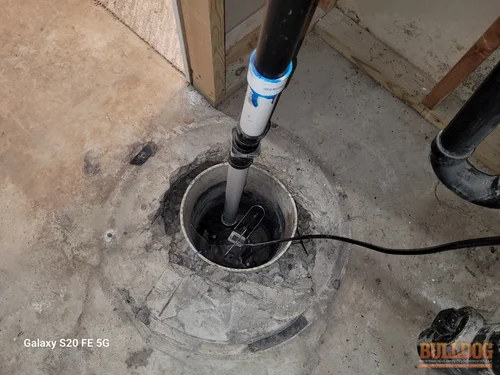
The unsealed sump pit in this Brougham Village home was undermining what should have been an effective radon mitigation system.
The buyer didn’t panic or walk away from the deal.
Instead, they negotiated with the seller to install a proper sealed lid on the sump pit before closing, which is exactly the right response when you find a fixable problem during inspection.
This type of oversight happens more often than it should, particularly when radon mitigation systems get installed years after the original construction or when homeowners add sump pumps without considering how they interact with existing radon systems.
The good news is that sealing a sump pit is straightforward work that costs far less than installing an entirely new radon mitigation system from scratch.
What matters most is catching these problems before you buy rather than discovering them after you move in.
That’s where radon testing and a thorough home inspection create real value.
You’re not just checking boxes on a form.
You’re identifying specific issues that need fixing so you can negotiate repairs, adjust your offer, or make informed decisions about whether this home is right for your family.
About the Author
Steve Rodriguez is a professional home inspector and the owner of Bulldog Professional Inspection Services. He performs more than 600 home inspections annually all across the KC metro area.
Based in: Raymore, MO
Service Areas: Belton, Raymore, Harrisonville, Grandview, Lee’s Summit, Blue Springs, Raytown, Independence, Liberty, Kansas City, MO, Kansas City, KS, Olathe, Leawood, Overland Park, Prairie Village, Shawnee, Lenexa
Certifications: Certified Master Inspector® (CMI). International Association of Certified Home Inspectors (InterNACHI) Certified Professional Inspector since 2004.
This article is based on a real inspection conducted in January 2026. The property address has been excluded for privacy. Cost estimates reflect Kansas City metro area pricing as of January 2026 and may vary based on specific conditions and contractor selection.
Helpful Links
- Check out our GBP post about this lesson
- Recent inspections in Olathe, KS
- Home inspection lessons found in other Olathe, KS homes
- Learn more about your radon system in the Olathe area
Schedule Your Home Inspection
Call: (816) 564-3081
Email: info@bulldoginspect.com
Schedule Your Inspection Online