


A home inspector’s guide to finding hidden plumbing leaks in Overland Park homes, with warning signs, repair costs, and why running water during inspection matters.
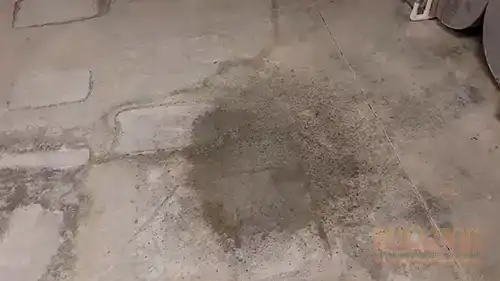
Yesterday morning during the plumbing inspection of a vacant 21-year-old 1.5-story home in Overland Park’s Windsor Hills subdivision, I discovered the guest bathroom sink was leaking onto the bare concrete basement floor.
The leak was slow but visible — water dripping from the compression fitting where the supply line connected to the faucet body, pooling on the floor below.
I would never have found this leak if I hadn’t run the water continuously throughout the entire inspection.
Most home inspectors run water through fixtures for only 10-15 seconds per faucet, then move on to the next system. This abbreviated testing misses slow leaks that take 20-30 minutes of water pressure to expose.
In Overland Park’s aging housing stock, I find hidden plumbing leaks in approximately 60% of homes over 20 years old. These leaks are often slow enough that homeowners don’t notice them until water damage becomes visible inside walls, above ceilings, or under floors.
The real danger isn’t always the leak itself — it’s what happens when the leak goes undetected. Slow water intrusion creates conditions for mold growth, wood rot, and structural damage that can cost thousands to remediate.
This isn’t a future problem — it’s an active hazard that can be hiding in any home where plumbing fixtures haven’t been used recently or where connection seals have degraded over time.
Understanding Plumbing Leaks: What They Are and Why They Fail
Plumbing leaks occur when the seals at connection points fail under pressure and time.
In a home like the 21-year-old property in Windsor Hills, the rubber washers and compression fittings that seal supply line connections degrade over two decades of constant use, temperature fluctuations, and mineral buildup from Overland Park’s hard water.
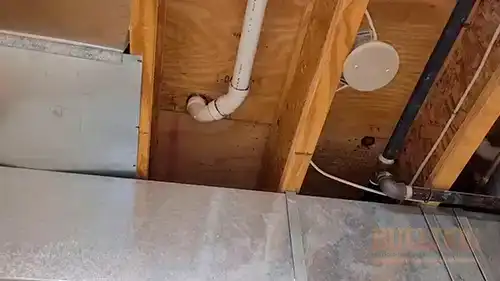
The most common causes of bathroom sink leaks include corroded supply line connectors (especially if original metal braided lines are still in place), failed P-trap seals where the drain connects to the wall, and worn faucet cartridges that allow water to drip or spray internally.
When these components fail, water escapes slowly at first, then accelerates as the seal deteriorates further.
The progression is gradual but predictable: a compression fitting begins weeping at the threads, water accumulates slowly on the cabinet floor or inside the wall cavity, and over weeks or months, the leak worsens as the seal loses integrity completely.
In vacant homes, this process accelerates because the home experiences extreme temperature swings without climate control — hot days heat the pipes, cold nights cool them, creating stress cycles that loosen connections faster.
Additionally, when homes sit vacant, pipes can develop micro-cracks from freeze-thaw cycles if heating isn’t maintained during winter months in Overland Park’s variable climate.
How to Identify Hidden Plumbing Leaks in Your Home: 6 Warning Signs
You don’t need to be a professional home inspector to spot the early warning signs of hidden plumbing leaks.
Here’s what to watch for in any home over 20 years old, especially those in Overland Park where water hardness accelerates fitting deterioration:
- Water stains on ceilings or walls below bathrooms or kitchens. These brownish or yellowish discolorations indicate water has been escaping from pipes above for weeks or months. If you see them, the leak is already advanced enough to cause damage.
- Soft spots in drywall, flooring, or cabinetry near plumbing fixtures. Press gently on walls and cabinet bottoms near sinks. If the material feels spongy or soft, water has been accumulating inside the cavity and has started breaking down the structural material.
- Musty or moldy odors coming from cabinets under sinks. This smell indicates mold is growing in the hidden cavity where water has been dripping. Mold thrives in dark, damp spaces and poses health risks beyond just property damage.
- Water pooling under sinks or appearing on basement floors directly below bathroom fixtures. This is the most obvious sign, but many homeowners miss it because they don’t look under sinks regularly. In vacant homes like the Windsor Hills property, pooling water on concrete floors is the first visible evidence.
- Increasing water bills without a corresponding increase in usage. If your monthly water bill suddenly jumped 10-20% without explanation, you likely have a slow leak somewhere. Run through your home and check all visible plumbing connections.
- Dripping sounds inside walls or under floors, especially at night when the house is quiet. This auditory clue means water is actively escaping and dripping into a cavity. The longer you wait to investigate, the more damage accumulates.
Check under all sinks monthly by opening cabinet doors and looking for dampness, mineral stains, or pooling water.
Run water through every fixture for at least 30 seconds and listen for dripping sounds that continue after you turn the faucet off.
If you notice any of these warning signs, call a licensed plumber immediately — don’t wait for visible damage to appear on ceilings or walls.
What I Found in Windsor Hills, Overland Park: A Case Study
Yesterday morning I arrived at a vacant 21-year-old 1.5-story home in the Windsor Hills subdivision of Overland Park for a full home inspection, termite inspection, radon test, and sewer scope ordered by a repeat customer who was purchasing the property as-is.
The property had been vacant, and the first step in my plumbing inspection process is always confirming that water is turned on and flowing.
Once I confirmed water pressure at the main valve, I began systematically running water through every fixture — starting on the second floor and working my way down.
My inspection methodology is different from most home inspectors: I run all faucets wide open in each space, then leave them trickling as I move to the next area.
This maintains pressure on the system to expose weak points, but prevents overflow and reduces water waste during the extended testing period.
By the time I reached the basement to test the main sewer line and water main shutoff, I’d been running water continuously for nearly 45 minutes.
That’s when I noticed water pooling on the bare concrete basement floor directly below the guest bathroom — water was dripping from the compression fitting where the hot water supply line connected to the faucet body.
I immediately photographed the leak, measured the wet area on the concrete, and traced the water source to the fitting itself.
The fitting was actively leaking under pressure, which meant the rubber washer seal inside the compression nut had failed completely.
This wasn’t a simple tightening fix — the seal had deteriorated beyond recovery and the fitting needed replacement.
If I’d tested the plumbing using the standard 10-15 second per fixture protocol that most inspectors use, this leak would never have been discovered.
The slow drip wouldn’t have been visible during a quick test, and the buyer would have moved into the home and discovered the leak weeks later when water damage became visible.
The Financial Reality of Plumbing Leaks: What Repairs Actually Cost
Cost Breakdown
Repairing bathroom sink leaks in the Overland Park typically costs between $150 and $800 depending on the source and extent of the leak.
Simple repairs run $150-$300 and include replacing a compression fitting, tightening a loose connection, or replacing a worn washer inside the faucet assembly.
These address situations where the leak source is easily accessible and the damage is minimal.
Moderate repairs cost $400-$600 and include replacing the entire supply line, repairing a failed P-trap seal, or addressing minor water damage to cabinetry.
This tier applies when the leak has been active long enough to cause localized damage but hasn’t spread to structural materials.
Major repairs run $700-$1,500 when the leak has caused water damage to drywall, flooring, or structural framing.
These repairs include not only fixing the plumbing leak but also replacing damaged materials, treating for mold, and addressing any structural concerns.
In the Overland Park Windsor Hills home, the repair was straightforward — replacing the compression fitting and supply line — estimated at $200-$350 by local plumbers.
However, if this same leak had gone undetected for months in a finished basement with drywall ceilings, the repair cost would have escalated to $1,500-$2,500 to address mold remediation and material replacement.
Overland Park plumbers typically charge $75-$150 per hour for labor, plus $25-100 for parts depending on the fitting or component being replaced.
Timeline for repairs typically ranges from 1-2 hours for simple compression fitting replacement to 1-2 days for more complex work involving wall or floor access.
What Happens If You Ignore It
Months 1-3: Water continues dripping slowly onto the floor or inside the wall cavity. You might notice water stains developing, soft spots appearing in cabinetry, or musty odors emerging from under the sink. The concrete floor or drywall begins absorbing moisture. Cost to repair at this stage: still $150-$400 for the fitting replacement alone.
Months 3-12: The leak worsens as the fitting continues to deteriorate. Water accumulation accelerates. Mold begins growing in the dark, damp cavity. Wood framing inside walls starts showing signs of rot. Drywall becomes soft and spongy. The smell becomes unmistakable. Cost to repair: $800-$1,200 because now you’re treating mold and replacing drywall.
Years 1-2: Structural damage becomes apparent. Framing lumber shows visible rot and softening. Mold spreads to adjacent wall cavities. Flooring begins warping or buckling from water absorption. You’re now facing not just plumbing repair, but structural remediation. Cost to repair: $2,000-$3,500 or more depending on how much structural material needs replacement.
The buyer in this Overland Park home is purchasing as-is and will hire a plumber to fix the leak before moving in — a smart decision that prevents months of water damage escalation.
Why This Matters in Overland Park, KS.
Overland Park’s Windsor Hills subdivision was developed between 1999 and 2007, which means homes in this neighborhood are now 18-26 years old — right at the critical threshold where plumbing components are reaching the end of their designed lifespan.
These homes were built during a period when builders used standard compression fittings and rubber washers that are designed to last 20-25 years under normal use conditions.
After two decades, these seals begin failing predictably across entire neighborhoods at approximately the same time.
Overland Park’s water chemistry accelerates this process — our hard water contains dissolved minerals that deposit inside pipes and on fitting threads, increasing friction and corrosion at connection points.
The condition I observed in this Windsor Hills home is typical for Kansas City-area plumbing that hasn’t received regular water softening treatment.
Our climate compounds the problem: freeze-thaw cycles during midwest winters stress all plumbing connections as water inside pipes expands during freezing and contracts during thawing.
Vacant homes are particularly vulnerable because they lack climate control and regular water movement through the pipes.
In subdivisions like Windsor Hills, Sunset Hills, and other Overland Park neighborhoods built in the 1999-2007 era, I consistently find plumbing leaks in homes approaching or exceeding 20 years old.
It’s not an anomaly — it’s a predictable pattern based on when these neighborhoods were built and what materials were used during that construction period.
What You Should Do
For Homebuyers
If you’re buying a home over 20 years old in Overland Park or anywhere in the Kansas City area, insist that your home inspector runs water continuously throughout the inspection.
Ask your inspector specifically: “Will you run water for an extended period to expose slow leaks?” and “Will you test all fixtures, not just quick pressure checks?”
If your inspector discovers a plumbing leak, don’t panic — it’s fixable, but you need accurate information before negotiating.
Get a plumber’s estimate for the repair before making an offer or renegotiating the purchase price.
In this Overland Park home, the repair was straightforward and affordable — budget $200-400 for a simple fitting replacement.
If the leak has caused water damage, you’ll need a separate estimate for damage remediation.
Negotiate a credit at closing large enough to cover both the plumbing repair and any water damage assessment.
Walk away if the seller refuses to address the leak or provide a credit, and a plumber’s estimate shows structural damage exceeding $1,000.
For Homeowners
If you own a home over 20 years old, check under every sink quarterly by opening cabinet doors and looking for water, stains, or soft spots.
Run water through every fixture for at least 30 seconds monthly to maintain system pressure and expose developing leaks.
Listen for dripping sounds in walls and under floors, especially at night when the house is quiet — these auditory clues indicate active water escape.
If you notice any warning signs, call a licensed plumber immediately rather than waiting for visible damage to appear on ceilings or in walls.
Budget for plumbing system updates: compression fittings and rubber washers degrade predictably over 20 years, so if your home is approaching that age, expect some component failures.
Water is the most critical utility in a home because its damage is cumulative and often hidden — a slow leak that goes undetected for months can cause thousands in structural damage.
For Sellers
Pre-listing inspections reveal plumbing leaks before buyers discover them, giving you control over the repair timeline and contractor selection.
If you find leaks during a pre-listing inspection, fix them before listing — homes with recent plumbing system documentation and repairs sell faster and for higher prices than comparable homes with deferred maintenance.
If you’re selling a home over 20 years old, expect buyers to ask about plumbing system age and condition — be transparent about any known leaks or repairs.
Disclose everything and price accordingly if you can’t afford repairs; buyers will find issues anyway, and non-disclosure creates legal liability after closing.
What Happened Next: The Resolution
The buyer is purchasing the property as-is, which means they accepted the home in its present condition and will hire a plumber to find the source of the leak and fix it before moving in.
This is the smart approach for an investment property or a buyer comfortable with managing repairs — they have time to get competitive quotes from multiple plumbers and won’t face the pressure of closing deadlines.
The repair should be straightforward: replace the compression fitting at the guest bathroom sink supply line connection, which typically costs $200-350 and takes 1-2 hours.
However, the plumber will also inspect for any water damage to the concrete floor and assess whether the leak has penetrated into wall cavities or caused secondary damage that requires remediation.
The Bigger Picture
Hidden plumbing leaks in Overland Park homes aren’t isolated incidents — they’re predictable failures that happen when 20-year-old compression fittings and rubber washers reach the end of their designed lifespan.
I’ve inspected almost 600 homes in the past year across the KC metro area, and I find some level of active or developing plumbing leaks in approximately 60% of homes over 20 years old.
This percentage increases significantly in homes that have sat vacant or where water hasn’t been run through fixtures for extended periods.
Most homes inspected using standard 10-15 second water tests never reveal these slow leaks — they only become visible when water pressure is maintained for 30+ minutes, as I do during my inspections.
The methodology matters more than the inspector’s certification: running water for extended periods exposes weak seals that quick tests miss.
If you’re buying or selling a home in Overland Park’s Windsor Hills or any other neighborhood built between 1999 and 2010, assume plumbing component failures are likely and budget accordingly.
A hidden plumbing leak discovered during inspection is actually good news — it means you can fix it before water damage escalates.
A plumbing leak that goes undetected costs exponentially more to remediate once mold growth and structural damage develop.
Knowledge about your plumbing system’s condition removes uncertainty and lets you make informed decisions about repairs, pricing, and negotiation.
About the Author
Steve Rodriguez is a Certified Master Inspector® and performs over 600 home and property inspections annually all across the KC metro area.
Based in: Raymore, MO
Service Areas: Belton, Raymore, Harrisonville, Grandview, Lee’s Summit, Blue Springs, Raytown, Independence, Liberty, Kansas City, MO, Kansas City, KS, Olathe, Leawood, Overland Park, Prairie Village, Shawnee, Lenexa
Certifications: Certified Master Inspector® (CMI). International Association of Certified Home Inspectors (InterNACHI) Certified Professional Inspector since 2004.
This article is based on a real inspection conducted in November 2025. The property address has been excluded for privacy. Cost estimates reflect Kansas City metro area pricing as of November 2025 and may vary based on specific conditions and contractor selection.
Helpful Links
- Check out our GBP post about this lesson
- Learn more about your home’s plumbing system
- Recent home inspections in Overland Park
- Home inspection lessons found in other Overland Park homes
Schedule Your Home Inspection
Call: (816) 522-0001
Email: info@bulldoginspect.com
Schedule Your Inspection Online