A home inspector’s reflection on hail damage in Raymore homes, with repair costs and timeline expectations
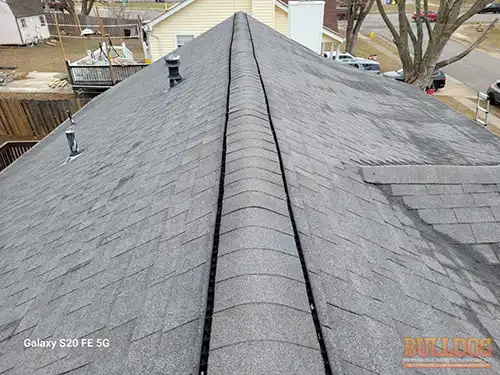
Last Monday morning during the roof inspection of a vacant 39-year-old raised ranch in the Foxhaven subdivision of Raymore, I found extremely old, worn, and hail damaged roof shingles.
The roof shingles were in terrible shape. The hail damage had taken its toll over the years, and with the roof shingles already being old and worn, they were well past their useful life.
As a result, the whole roof needed to be replaced.
When roof shingles get old and worn like these were, they lose their flexibility and their ability to shed water properly.
Hail strikes compound the problem by creating fractures and indentations that trap moisture. Once moisture gets underneath, it doesn’t just sit there.
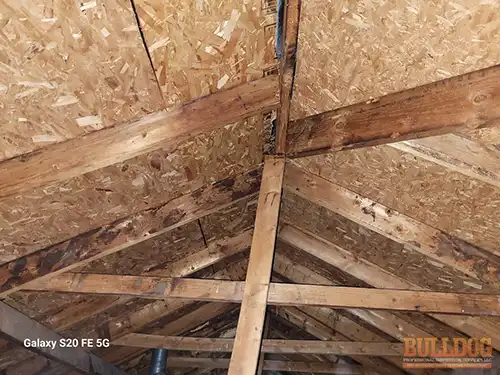
It works its way into the roof deck, where it can cause rot, mold, and structural damage.
The age of the roof shingles made things worse. At 39 years old, this roof was already past its expected lifespan. Most asphalt roof shingles last 20 to 30 years depending on quality and climate conditions.
By the time I showed up in Raymore, these roof shingles were already operating on borrowed time.
Hail damage on an aging roof accelerates failure from hail damage.
The granules that protect the asphalt from UV rays get knocked off with every strike. Without that protective layer, the roof shingles deteriorate faster from sun exposure.
For buyers in Raymore, this is important because roof replacement isn’t cheap. A full replacement on a raised ranch this size in Raymore typically runs $8,000 to $15,000 depending on materials and labor costs. That’s not something most buyers are prepared to absorb right after closing.
Understanding Hail Damage: What It Is and Why It Destroys Roof Shingles

Hail damage happens when ice pellets falling from thunderstorms strike your roof with enough force to crack, fracture, or dent the roof shingles.
What Is Hail Damage?
The impact creates visible bruising on asphalt roof shingles, which shows up as dark spots where the protective granules have been knocked off.
These granules are embedded ceramic particles that shield the underlying asphalt from UV rays.
When hail strips them away, the asphalt layer gets exposed to direct sunlight.
Why Hail Damage Happens
Hailstones vary in size from pea-sized to softball-sized depending on storm conditions.
The bigger the hailstone, the more hail damage it causes.
Even small hail can crack older roof shingles that have already lost flexibility from years of sun exposure.
Larger hail creates deep indentations that compromise the waterproof seal on roof shingles.
Kansas City and surrounding areas like Raymore sit in a region that sees frequent severe thunderstorms from spring through early fall.
How Hail Damage Develops Over Time
A single hailstorm probably won’t destroy your roof, but hail damage accumulates.
Each storm weakens the roof shingles a little more. The first storm might knock off some granules.
The second storm creates cracks in areas already weakened.
The third storm breaks through the asphalt layer entirely.
Once the protective granule layer is gone, UV rays accelerate deterioration:
- The asphalt binder dries out and becomes brittle.
- Cracks widen.
- Water seeps underneath during rain.
By the time consequences of hail damage appears inside your home, the roof deck underneath has likely been compromised for months.
The timeline from first hail impact to complete failure varies.
Newer, high-quality roof shingles might withstand several storms before showing serious hail damage. Older roof shingles like the ones I found in Raymore fail much faster.
Let’s address the most common questions about hail damage I encounter during inspections in Raymore.
How long do roof shingles last?

Roof shingles typically last anywhere from 15 years to well over 100 years depending on the material, but asphalt roof shingles, which cover most homes in Raymore, typically make it 20 to 25 years in Missouri’s climate.
The material you choose determines your baseline lifespan.
Asphalt roof shingles dominate the residential market because they balance cost and durability.
Different materials have different lifespans:
- Metal roofs: 40 to 70 years
- Slate: 75 to 100+ years
- Tile: 75 to 100+ years
Wood shingles or shakes can last 30 to 50 years if you maintain them properly, though they need more attention than asphalt.
Now, your actual results vary based on conditions and maintenance.
Several factors affect shingle lifespan:
- Climate conditions
- Ventilation quality
- Installation quality
- Maintenance habits
- Manufacturer ratings
Poor attic ventilation traps heat and moisture, which accelerates deterioration.
Shingles bake from below while the sun hits them from above.
This double-heat attack shortens their life significantly.
Thing is, even premium roof shingles fail early if installed incorrectly. Nails driven too deep or too shallow, improper overlap, or inadequate starter strips can create weak points where wind and water cause premature failure. Installation quality matters as much as material quality.
Regular maintenance extends lifespan. Keeping gutters clear prevents water backup that can rot fascia and lift roof shingles. Trimming overhanging branches stops debris accumulation and reduces moisture retention.
Manufacturer warranties give you a reference point but rarely reflect real-world performance.
A 30-year rated shingle might only deliver 22 to 25 years in harsh climates with temperature swings, hail exposure, and UV intensity like we see in Raymore.
In reality, most homeowners in Raymore replace their roofs based on visible deterioration rather than hitting some magic year number.
What does hail damage look like on a roof?
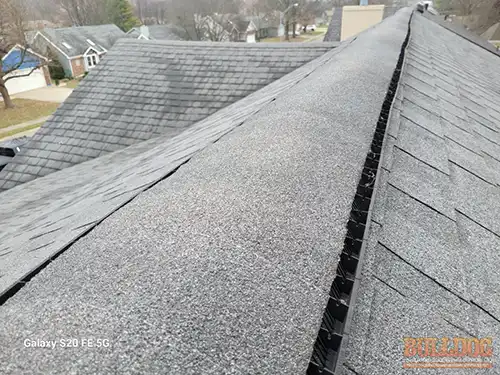
Hail damage on a roof shows up as dents, dings, or bruises on roof shingles, along with missing granules that expose the black asphalt underneath.
The most obvious sign is granule loss.
Asphalt roof shingles have a protective layer of small, pebble-like granules that shield the asphalt from UV rays.
When hail hits, it knocks these granules off, leaving dark spots or patches where the underlying asphalt shows through.
Dents and bruises are another telltale sign of hail damage.
On asphalt roof shingles, hail impacts create soft spots that feel like bruises on an apple when you press on them.
These aren’t always visible from the ground, but you can feel them if you climb up and check.
Thing is, the size of the hail matters. Hailstones need to be about 1 inch in diameter (quarter-sized) or larger to cause functional hail damage to asphalt roof shingles. Smaller hail might leave marks but won’t necessarily compromise the roof’s integrity.
Cracked or split roof shingles indicate more severe hail damage.
Large hailstones can fracture the shingle mat, creating cracks that let water seep through.
These splits usually have sharp edges and brown or orange coloring where the impact occurred.
You’ll also want to check the metal components.
Roof vents, flashing, gutters, and downspouts show dings pretty clearly since metal dents easily.
If these components have damage, there’s a good chance your roof shingles do too.
Hail damage typically appears random across the roof rather than in a pattern.
You might see more impacts on slopes that faced the storm’s direction, but the hits themselves scatter unpredictably.
Now, not all roof damage comes from hail. Normal aging causes granule loss too, but it happens gradually and evenly. Hail damage appears suddenly after a storm and creates distinct impact marks.
Missing or displaced granules around a central hit point confirm hail damage rather than wear.
The hail damage might not leak right away.
Hail weakens roof shingles by creating points where water can eventually penetrate, but the roof might function fine for months or years before problems show up.
Check your gutters for accumulated granules after a hailstorm in Raymore.
A sudden collection of granular material washing down indicates potential hail damage worth investigating further.
Do I need a new roof after hail damage?
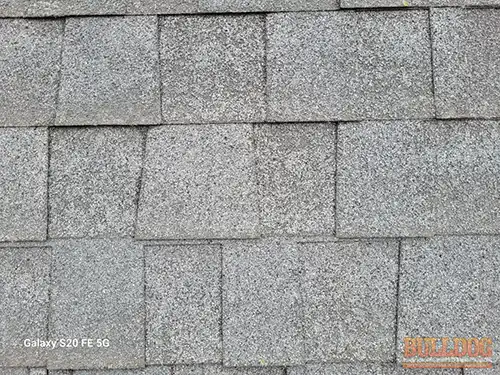
Whether you need a new roof after hail damage depends on how extensive the hail damage is, how old your roof is, and what your insurance company decides.
Minor hail damage doesn’t automatically mean replacement.
If the hail damage is limited to a few roof shingles and your roof is relatively new, repairs might be all you need.
Thing is, the extent of the hail damage matters most. If more than 25 to 30 percent of your roof shows functional damage, replacement usually makes more financial sense than patching. Insurance companies in Raymore often use this threshold when deciding between repair and replacement.
Your roof’s age plays a big role in this decision.
An older roof that’s already near the end of its lifespan probably needs replacement even if the hail damage seems moderate.
The hail damage just accelerates what was already coming.
A newer roof with isolated hail damage can often be repaired. Insurance adjusters consider remaining useful life when they evaluate claims. A 5-year-old roof with minor damage gets treated differently than a 20-year-old roof with the same hits.
Insurance coverage determines what happens next in most cases. Most policies cover sudden, accidental damage from hail, but you’ll need a professional inspection to document everything. The adjuster’s assessment drives the decision more than your preference.
Now, cosmetic damage alone usually doesn’t qualify for replacement. If the roof shingles show dents or bruising but still function properly and don’t leak, insurance might deny the claim or only approve repairs.
Functional damage is what matters.
This typically means the hail compromised the roof’s ability to keep water out.
Functional damage includes:
- Cracked shingles
- Mat fractures
- Significant granule loss
You should get a professional inspection after any significant hailstorm in Raymore. A qualified inspector can identify hail damage you might miss from the ground and document everything properly for insurance purposes.
Don’t wait too long to file a claim. Most policies give you one year from the storm date, but the sooner you start the process, the better your chances of approval.
When should I replace my roof?
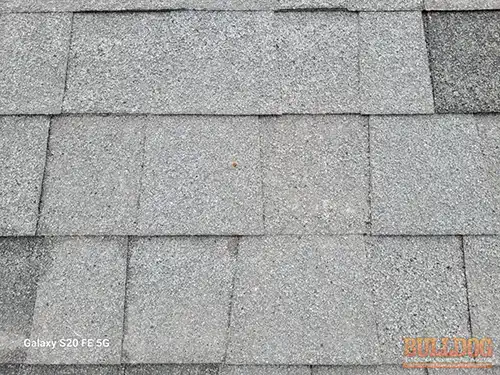
You should replace your roof when it reaches the end of its expected lifespan, shows widespread damage, or develops leaks that make repairs impractical.
Age is the primary factor.
Most asphalt shingle roofs in Raymore last 20 to 25 years in Raymore’s climate.
If your roof is approaching or past this age, replacement probably makes more sense than continued repairs.
Material type also affects this timeline.
Metal roofs can last 40 to 70 years, while slate or tile might go 75 to 100 years or more.
Wood shingles typically need replacement around 30 years.
Thing is, visible deterioration tells you when the roof is failing regardless of age.
Signs the material has broken down include:
- Curling shingles
- Cupping shingles
- Missing shingles
Widespread granule loss exposes the asphalt underneath, leaving it vulnerable to UV damage and water penetration.
Multiple leaks or recurring water damage signal that the roof can no longer protect your home adequately.
If you’re patching problems every year or two, replacement becomes the more economical choice.
Storm damage might trigger replacement sooner than planned.
Significant hail damage, wind-torn sections, or fallen tree impacts can compromise enough of the roof that full replacement makes sense even on a newer installation.
Plus, if you’re seeing daylight through the roof boards from inside the attic, that’s a clear sign the deck itself has failed and needs attention beyond simple shingle replacement.
Your neighbors’ roofs in Raymore provide useful context.
If homes built around the same time in your subdivision are getting replaced, your roof is probably reaching that point too since they’ve faced the same weather conditions.
Energy costs can indicate roof problems.
If your heating or cooling bills have jumped without other explanation, poor roof ventilation or failing insulation might be the cause.
Insurance claims sometimes force the timeline.
After documenting storm damage, adjusters might determine the roof needs replacement rather than repairs based on the extent of damage and remaining useful life.
The sheathing condition matters too.
If the roof deck shows rot, sagging, or water damage, you can’t just overlay new shingles.
The structure needs rebuilding from the deck up.
How much does it cost to replace roof shingles?
Roof replacement typically costs $10,000 to $23,000 for an average-sized home in the Kansas City area, though the final price depends on roof size, material choice, complexity, and contractor rates.
Material selection drives most of the cost variation.
- Standard three-tab asphalt shingles usually run $3.40 to $5.50 per square foot installed.
- Architectural shingles, which are thicker and more durable, typically cost $4.50 to $7.00 per square foot installed.
- Premium designer shingles or alternative materials like metal can push costs to $8.00 to $12.00+ per square foot.
Your roof’s size determines the baseline cost.
Most contractors price by the square, which equals 100 square feet.
An average 2,000-square-foot home might have 2,200 to 2,400 square feet of actual roof surface depending on pitch and complexity.
Thing is, roof complexity affects labor costs significantly. Multiple valleys, steep pitches, dormers, or complex angles typically add $2,000 to $5,000 to the total. Simple gable roofs cost less per square foot than intricate designs.
Removal of old roofing materials adds expense.
Tearing off and disposing of existing shingles usually runs $1.00 to $2.00 per square foot.
Some jobs allow overlaying new shingles on top of one existing layer, but this only works if the deck underneath is sound.
Additional repairs will add to the final bill:
- Roof deck replacement
- New flashing
- Valley metal
- Pipe boots
Geographic location affects pricing too.
Labor rates in metropolitan Kansas City and affluent Johnson County suburbs like Overland Park tend to run 5 to 15 percent higher than rural Missouri communities like Raymore.
Premium materials might cost the same everywhere, but installation labor varies by region and local demand.
The time of year influences contractor availability and pricing.
Spring and fall are peak roofing seasons when contractors stay busy and might charge premium rates.
Winter installations sometimes come with discounts, though weather can delay projects.
Insurance coverage changes your out-of-pocket costs.
If hail or wind damage triggered the replacement and your claim gets approved, you might only pay your deductible, which typically ranges from $500 to $2,500.
- Basic asphalt shingle replacements for smaller, simpler roofs can start around $5,000 to $8,000.
- Mid-range homes with 2,000 to 3,000 square feet generally run $10,000 to $15,000.
- High-end or complex projects with multi-story designs, steep pitches, or luxury materials can reach $20,000 to $45,000 or more.
- Permits and inspections usually add $150 to $500 depending on your local jurisdiction.
Most reputable contractors handle this as part of their service, but the cost gets passed through to you.
I see worn, hail-damaged roof shingles on older roofs in Raymore more often than most homeowners realize.
It accumulates over years of storms until the roof finally reaches the point where repairs no longer make sense.
By the time buyers contact me for an inspection, the deterioration can be advanced enough that replacement is the only realistic option.
That’s exactly what happened in Raymore on this 39-year-old raised ranch.
The roof shingles had reached the end, and no amount of patching would have extended their life in any meaningful way.
Knowing what hail damage looks like and understanding when replacement becomes necessary helps you make informed decisions rather than reacting to leaks after they start.
If you’re buying a home in Raymore and spot visible roof wear during your walkthrough, schedule a professional inspection before you sign anything. An $8,000 to $15,000 surprise right after closing isn’t something most buyers budget for.
About the Author
Steve Rodriguez is a professional home inspector and the owner of Bulldog Professional Inspection Services. He performs more than 600 home inspections annually all across the KC metro area.
Based in: Raymore, MO
Service Areas: Belton, Raymore, Harrisonville, Grandview, Lee’s Summit, Blue Springs, Raytown, Independence, Liberty, Kansas City, MO, Kansas City, KS, Olathe, Leawood, Overland Park, Prairie Village, Shawnee, Lenexa
Certifications: Certified Master Inspector® (CMI). International Association of Certified Home Inspectors (InterNACHI) Certified Professional Inspector since 2004.
This article is based on a real inspection conducted in January 2026. The property address has been excluded for privacy. Cost estimates reflect Kansas City metro area pricing as of January 2026 and may vary based on specific conditions and contractor selection.
Helpful Links
- Check out our GBP post about this lesson
- Recent inspections in Raymore, MO
- Home inspection lessons found in other Raymore, MO homes
- Learn more about your roof system in the Raymore area
Schedule Your Home Inspection
Call: (816) 564-3081
Email: info@bulldoginspect.com
Schedule Your Inspection Online