A master home inspector’s personal insights on 60-amp fuse panels in Kansas City, MO homes, with safety warnings and repair guidance.

A couple of months ago during the electrical inspection of a vacant 78-year-old ranch-style home in the Little Blue Valley area of Kansas City, MO, I found that the property still had the original 60-amp fuse panels.
Walking into a historic home is always interesting. It’s easy to see how the property was originally wired and how it has held up over the decades.
When this house was built, a fuse box was the standard for residential power, and it served families well for years by protecting them from electrical overloads. But the way we live today is much different from the way it was when these properties were first built.
Modern families use much more power for devices like big-screen TVs and home offices, and this extra demand can put a lot of strain on an old fuse box. This can lead to safety issues or trouble getting homeowners insurance for a new purchase.
I want to make sure you have all the facts so you can make a smart decision, whether you’re a first-time buyer or a seasoned investor in Kansas City, MO.
These are five fuse box questions everyday people ask with older homes:
Is it safe to live in a house with a fuse box?

It is generally safe to live in a house with a fuse box as long as the system is well-maintained and uses correctly sized fuses for the wiring. However, many older homes in Kansas City, MO, have electrical systems designed for much lower power demands, which can pose a fire risk if the circuits are overloaded or homeowners use oversized fuses to prevent them from blowing.
The Fundamental Safety of Properly Sized Fuses
Fuses have been a reliable way to protect homes for over a hundred years. A fuse is a simple device designed to melt and break the circuit if too much current flows through it.
In some ways, they are even more sensitive than modern breakers. They react very quickly to a short circuit or overload, which can actually benefit your safety.
If your fuse box has the right fuses installed, it can protect your home just fine. The danger usually arises when people try to change the system to accommodate more appliances.
As long as you don’t bypass the fuse or use one that is too large, the system is doing its job to keep you safe.
The Old Technology Factor and Deterioration
While the design of a fuse box is safe, the age of the equipment in an older home can be a concern. Over many decades, the metal parts inside the panel can get loose or corroded.
This can generate heat even when you aren’t using much power. This heat can slowly damage the surrounding materials without you even realizing it.
The wiring connected to that fuse box might also be showing its age. In many Kansas City, MO homes built decades ago, the wires are covered in a cloth material that can become dry and brittle.
When the insulation flakes off, it can leave bare wires exposed inside your walls. This creates a risk for sparks that could start a fire in a historic home.
Lack of Modern Life-Safety Features
One of the biggest downsides to an older electrical system is that it lacks the safety features we take for granted today. Modern panels use special breakers that can detect even tiny electrical leaks or dangerous sparks.
A standard fuse box can’t tell the difference between a normal load and a dangerous arc. This means a fire could start from a loose wire before the fuse ever thinks about blowing.
These modern upgrades are now required by code because they save lives by stopping accidents before they happen. They are especially helpful in an old home where the wiring might be fragile.
Inadequate Amperage for Modern Living
When a historic home was first built, most families only had a few lights and maybe a radio. A 60-amp service was plenty of power for that lifestyle.
Today, we have air conditioners, electric dryers, and charging stations for our cars. These things pull a lot of power that old systems just weren’t built to handle.
Most modern homes need at least 100 or 200 amps to run safely. If you try to run a modern household on a 60-amp fuse box, you’ll probably blow fuses all the time.
This leads to frustration and might tempt you to make unsafe choices just to keep the lights on.
Do I need to replace my fuse box to get homeowners insurance?

Generally, yes, you will likely need to replace your fuse box to qualify for standard homeowners insurance in 2026. Most major insurance companies in the Kansas City, MO area view old fuse panels as a significant fire risk and may deny coverage entirely or charge much higher premiums until you upgrade to a modern circuit breaker system.
The Insurance Industry’s Stance on 60-Amp Service
Many homeowners’ insurance companies see an old 60-amp service as a big red flag. Back in the day, that was enough power, but now it can be a fire hazard because of how much electricity we use.
If a company thinks your house might have an electrical fire, they might not want to take the risk of covering you. This is why many providers are moving away from covering a historic home with this setup.
It is common for an insurance provider to tell a buyer that they won’t insure an old home until the panel is upgraded. This can be a shock if you’re right in the middle of buying a house.
You might find that your options for getting a policy are very limited if you keep the old fuse box.
Surcharges and Premium Penalties
If you do find a company that will cover a house with a fuse box, it will likely cost you more. They might add a surcharge to your bill because of the extra risk.
This means your monthly homeowners insurance payments could be much higher than for a modern home. This extra cost can really add up over the years.
Some companies might also give you a policy that doesn’t cover as much. These are sometimes called named peril policies.
They might only cover very specific things, leaving you in a tough spot if something else goes wrong with your Kansas City, MO home.
The Role of the 4-Point Inspection
When you try to get a new policy for an older home, the company will often ask for a 4-point inspection.
This inspection looks at four main parts of the house:
- The roof
- The HVAC system
- The plumbing
- The electrical system
The inspector will check the brand and the type of your electrical panel. If they see a fuse box, they will report it to the insurance company immediately.
This report is often what triggers the requirement to replace the panel before you can get homeowners’ insurance. It is one of the most common reasons for a policy denial in Kansas City, MO.
Eligibility for Renewals and Future Sales
Even if you already have insurance, you might run into trouble when it is time to renew your policy. Companies can change their rules, and they might decide they no longer want to insure an old home with a fuse box.
This could force you to pay for an expensive upgrade you didn’t expect. It is better to be proactive about these updates.
Keeping an old system can also make it harder to sell your house later on. A new buyer will encounter the same homeowners’ insurance problems you might be facing now.
Many people call a fuse box a deal killer because it can stop a home sale in its tracks.
Why do my fuses keep blowing when I use the microwave?

Fuses keep blowing when you use the microwave because this modern appliance pulls significant power on older shared circuits that were never designed for high-wattage electronics. In an older home in Kansas City, MO, the microwave is likely sharing a 15-amp fuse with kitchen lights or other outlets, causing the circuit to exceed its safe capacity and trip the fuse.
The Microwave as a Dedicated Circuit Requirement
Most people don’t realize that a modern microwave is one of the biggest power users in their kitchen. These gadgets often need a lot of watts just to heat up your lunch quickly.
Because they draw so much electricity, modern building codes usually require them to have a dedicated circuit. This ensures they don’t interfere with other items in your historic home.
In an old home with a fuse box, that dedicated line usually doesn’t exist. Instead, the microwave is plugged into an outlet originally meant for small appliances like a toaster or a clock.
When you turn on the microwave, it tries to grab more power than that old circuit can handle. This causes the metal link inside the fuse to melt, interrupting the flow of power.
Shared Circuits in Older Kitchens
Back when your older home was first built in Kansas City, MO, the electrical layout was very simple. It was common for an electrician to connect all the kitchen outlets and the ceiling lights to a single 15-amp fuse.
This worked fine for decades because nobody had a microwave or a high-powered coffee maker. Life was much simpler for homeowners back then.
Today, you might have the kitchen lights on and a refrigerator running when you start the microwave. All of that power has to flow through that one small wire and that one fuse.
Since the total demand exceeds the system’s capacity, the fuse melts its internal link to stop the flow of electricity. This is the system doing exactly what it was designed to do to keep you safe.
Understanding Nuisance Blowing vs. Real Overloads
It is easy to get frustrated when you have to go down to the basement to change a fuse while your dinner is half-cooked. You might think the system is broken or that the fuse is just being sensitive.
When a fuse blows, it indicates that the circuit is overloaded. This isn’t a mistake; it is a warning that you are asking the system to do more than it can safely handle.
If the fuse didn’t blow, the heat could melt the insulation on the wires and cause a serious problem inside your walls.
Temporary Solutions vs. Permanent Rewiring
If you are tired of dealing with this in your historic home, you can try some temporary fixes to help manage the load. You should check what else is on that circuit and try to turn off those devices before you use the microwave.
You can also try moving the microwave to an outlet in a different room. This might help if that room is on a less-used fuse in your Kansas City, MO home.
However, these are just temporary steps for a bigger issue. The only permanent fix is to have a licensed pro run a new circuit for the microwave.
This usually means adding a new line from the panel to the kitchen. It gives the microwave its own power path without affecting the lights.
Can I just put a bigger fuse in if it keeps blowing?
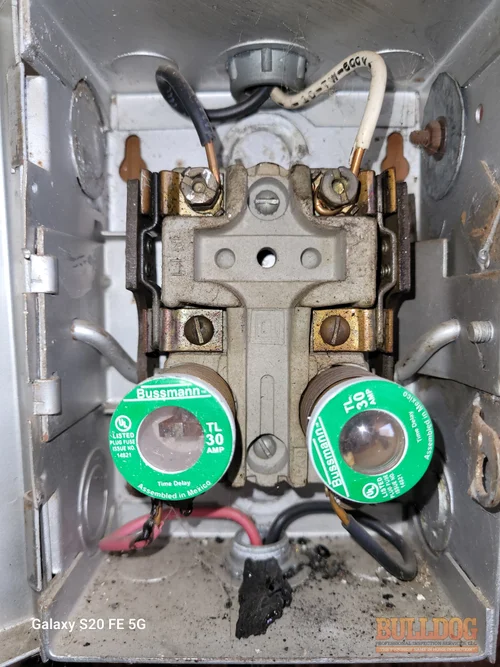
No, you should never install a larger fuse to prevent a circuit from blowing. Doing so allows the electrical wires to carry more current than they are rated for, which can cause them to overheat and melt their insulation inside your walls, leading to a high risk of an electrical fire in your Kansas City, MO home.
The Danger of Over-Fusing
When a fuse keeps blowing, it might be tempting to replace it with a 20-amp or 30-amp one. This is known as over-fusing, and it is a major safety hazard for any old home.
The fuse is sized to match the thickness of the copper wire in your walls. If you put in a bigger fuse, you are removing the safety limit that keeps those wires from getting too hot.
The wire inside your wall can only handle a certain amount of electricity before it starts to act like a heating element. Using an oversized fuse tells the system it is okay to draw more power than the wire was designed for.
Thermal Runaway and Electrical Fires
If you use a fuse that is too big, the wires can enter a state called thermal runaway. This happens when the wire gets so hot that the insulation, whether cloth or plastic, begins to smoke and melt.
Since this is happening inside your walls or in your attic, you might not smell the smoke until a fire has already started. This is a common danger in a historic home where the materials are very dry.
In many older homes in Kansas City, MO, the wood studs and dust inside the wall cavities can ignite easily once the wire insulation fails. An electrical fire is especially dangerous because it can travel through the house behind the walls before you even notice it.
Voiding Appliance Warranties and Insurance Claims
Aside from the fire risk, over-fusing can also cost you a lot of money in other ways. If a high-powered appliance is plugged into a circuit with the wrong fuse, it could get damaged by an internal fault.
Many manufacturers won’t honor their warranty if they find that the electrical system wasn’t properly protected. This could leave you paying for a new refrigerator or microwave out of your own pocket.
Even worse, your homeowners’ insurance company might investigate the cause of an electrical fire. If they find that you used the wrong size fuse, they could deny your claim entirely.
They view this as a preventable safety violation. You should always follow the size requirements listed on your fuse box to stay safe.
The Penny Under the Fuse Hazard
You might have heard stories about people putting a penny behind a blown fuse to get the power back on. You should never do this under any circumstances because it is extremely dangerous.
A penny is made of metal and will conduct electricity, but it doesn’t have a filament that will melt when things get too hot. It turns your entire electrical system into a giant fire risk.
Using a coin or any other object to bypass a fuse means you have zero protection for your old home. This is a dangerous trick that has caused many house fires over the years.
If your fuses keep blowing, it means your Kansas City, MO, property needs professional attention. You should call an electrician rather than try to bypass the safety features.
How much does it cost to replace a fuse box with a circuit breaker panel?

In the Kansas City, MO area, the average cost to replace an old fuse box with a modern circuit breaker panel is typically $1,500 to $4,500. This price includes the new panel and professional labor, but your total could be higher if your older home needs a service upgrade to 200 amps or the replacement of old branch wiring to meet current building codes.
Kansas City Metro Average Pricing for 2026
If you are looking to swap out a fuse box in a standard home, you can expect a wide range of prices depending on your specific needs. Most homeowners in Kansas City, MO, spend about $1,200 for a basic panel replacement, but that is often just for a simple swap without any extra work.
Since you are moving from fuses to breakers, the job is more complex. It usually starts closer to $1,500 for a 100-amp system in a historic home.
For many families, the best choice is to move up to a 200-amp panel. This is the modern standard for an older home in the Little Blue Valley and throughout the metro area.
A full 200-amp upgrade, including new equipment and labor to install it, typically costs between $2,000 and $4,000. It is a smart investment for the long-term safety of your property.
Factors That Increase the Total Project Bill
Every house is different, and there are several things that might push your final bill toward the higher end of the scale. One major factor is the condition of the wires connecting to your panel.
If your old home has wiring that is too short or has damaged insulation, an electrician might need to replace those lines. This extra work can add significantly to the total cost.
You might also need to relocate the panel to comply with modern safety codes. If your fuse box is currently in a closet or a bathroom, relocating it to a safe, open area can cost much more.
Other common costs include:
- Installing a new ground rod system
- Replacing the exterior meter box
- Adding specialty AFCI or GFCI breakers
Labor Costs and Permit Fees in Missouri and Kansas
Labor is usually the biggest part of the bill when you hire a pro in Kansas City, MO. Licensed electricians in our area typically charge between $50 and $150 per hour for their expertise.
Replacing an entire fuse box is a big job that often takes many hours. You should expect the labor portion to be a major part of your project budget.
You will also need to pay for a permit and a city inspection. In Kansas City, MO, these permits are required for any major electrical work on an older home.
The fee is usually based on the total cost of the job and is quite affordable. This is a good investment because it ensures an independent inspector checks the work to make sure it is safe for your family.
The Long-Term ROI on Your Home Value
While spending money on a metal box in the basement might not feel exciting, it is a smart move for your finances. An updated electrical system is a major selling point for buyers in the Kansas City, MO, real estate market.
It shows that the property is move-in ready and won’t have the problems associated with an old fuse box. This can make your home much easier to sell when the time comes.
You could also see immediate savings on your homeowners’ insurance. Many companies will lower your premium once you prove that the high-risk fuse box has been replaced with a safe, modern panel.
Over a few years, those lower homeowners’ insurance payments can help the upgrade pay for itself. It is one of the best ways to protect your historic home and your wallet simultaneously.
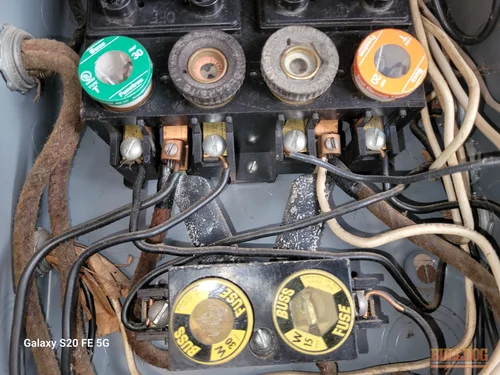
This older home is a perfect example of why getting a Kansas City, MO home inspection matters.
Finding a fuse box in a historic home doesn’t mean you should back out of the deal, but it does mean you need a plan.
And when you’re looking at a property with acreage, it’s easy to get distracted by the land. But the “guts” of an old home are what really determine if you’ll enjoy living there. Modernizing the electrical panel makes it easier to get the homeowners’ insurance you need while keeping your family safe.
Since most Kansas City, MO, providers are strict about fuses, an upgrade is usually the only way to get a standard policy.
Don’t look at an old fuse box as a deal-breaker. Instead, look at it as something to negotiate. Ask your agent if you can use your inspection report as the powerful tool it’s designed to be, so you can get the seller to cover the cost of a new breaker panel.
Addressing this early keeps your Kansas City, MO home safe and keeps your homeowners’ insurance costs from skyrocketing later.
About the Author
Steve Rodriguez is a professional home inspector and the owner of Bulldog Professional Inspection Services. He performs more than 600 home inspections annually, all across the KC metro area.
Based in: Raymore, MO
Service Areas: Belton, Raymore, Harrisonville, Grandview, Lee’s Summit, Blue Springs, Raytown, Independence, Liberty, Kansas City, MO, Kansas City, KS, Olathe, Leawood, Overland Park, Prairie Village, Shawnee, Lenexa
Certifications: Certified Master Inspector® (CMI). International Association of Certified Home Architects (InterNACHI) Certified Professional Inspector since 2004.
This article is based on a real inspection conducted in January 2026. The property address has been excluded for privacy. Cost estimates reflect Kansas City metro area pricing as of January 2026 and may vary based on specific conditions and contractor selection.
Helpful Links
- Check out our GBP post about this lesson
- Recent inspections in Kansas City, MO
- Home inspection lessons found in other Kansas City, MO homes
- Learn more about your electrical system in the Kansas City area
Schedule Your Home Inspection
Call: (816) 564-3081
Email: info@bulldoginspect.com
Schedule Your Inspection Online