A home inspector’s findings on electrical service cables in Grandview homes, with safety warnings and repair costs

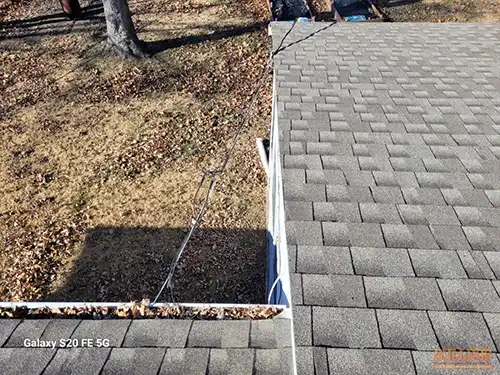
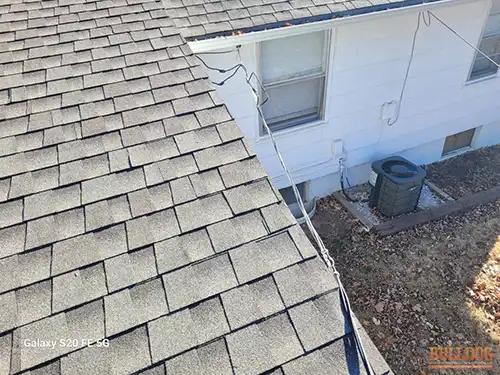
Last Tuesday morning during the electrical inspection of a vacant 63-year-old ranch-style home in the Meadowmere subdivision of Grandview, I found that the incoming service cables were making contact and rubbing roof shingles and sharp drip edge flashing.
The cables crossed the back patio roof and into the weatherhead and service meter, but they weren’t secured properly.
Every time the wind blew or the cables moved, they scraped against the shingles and the sharp metal edge of the drip flashing. This kind of contact wears down the cable insulation over time.
Once that insulation is compromised, the live conductors underneath can become exposed.
Service entrance cables rubbing against roofing materials create a serious electrical hazard that develops gradually.
The cables in this Grandview, MO home were crossing the back patio roof to reach the weatherhead and service meter, but they weren’t installed with enough clearance.
Physical contact between electrical service cables and sharp drip edge flashing creates friction every time the cables move. Wind causes the cables to sway, and temperature changes cause them to expand and contract.
Both movements force the insulation to rub against the sharp metal edge and the abrasive surface of the roof shingles.
This constant friction wears down the outer insulation layer that protects the conductors inside. Once the insulation is breached, you’re dealing with exposed energized conductors that are still carrying 120/240 volts to your entire home.
Rain can reach the bare copper.
Ice can form on it. Tree branches can make contact during storms. Any of these scenarios can create dangerous conditions.
The service entrance cables are always live because they connect directly to the utility company’s power lines before reaching your main disconnect.
This means these cables can’t be de-energized unless the utility company physically disconnects service at the pole or transformer. Most electrical repairs can be done safely by shutting off power at the main panel, but service entrance cables require specialized training and coordination with the utility company.
Understanding Electrical Service Cables: What They Are and Why Proper Installation Matters
Electrical service cables are the thick wires that deliver power from the utility company’s transformer or overhead lines directly to your home’s main electrical panel.
These cables typically consist of three or four insulated conductors bundled together, carrying 120/240 volts of electricity.
They connect at the weatherhead (the metal cap where utility power enters your home) and run down the exterior wall to the service meter and main disconnect.
The utility company owns everything up to the point of attachment, but homeowners are typically responsible for the weatherhead, meter base, and the cables between the attachment point and the main panel in Grandview homes.
Why Clearance Requirements Exist
The National Electrical Code requires specific clearance distances between service entrance cables and roof surfaces.
These requirements exist because constant contact between energized cables and building materials creates conditions for insulation failure.
Service entrance cables are designed to withstand weather exposure, but they’re not designed to handle continuous abrasion against rough surfaces like asphalt shingles or sharp metal flashing.
How Damage Develops
The insulation on service entrance cables can wear through gradually when subjected to repeated friction.
Wind movement and thermal expansion cause the cables to shift position throughout the day and across seasons.
Each movement creates friction when cables rest against roof materials.
Over months and years, this friction wears through the outer protective layer. The deterioration accelerates in Grandview’s climate because summer heat makes the insulation more pliable and winter cold makes it brittle.
Let’s address the most common questions about electrical service cables I encounter during inspections.
Can electrical service cables touch the roof?
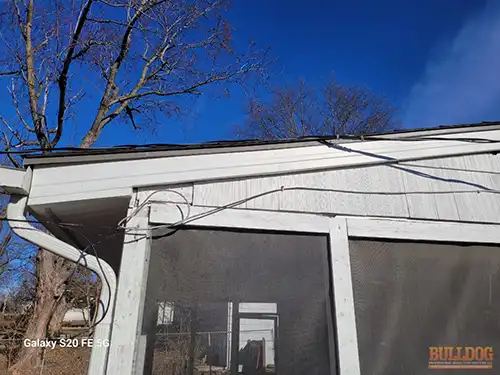
No, electrical service cables in Grandview homes should not touch the roof, gutters, or any roofing materials.
The problem is abrasion damage. Service cables that rest on or rub against roof surfaces can wear through their protective insulation from constant friction.
Sharp edges accelerate the damage. Roof shingles, metal drip edge flashing, and gutter seams can cut into the weatherproof coating over time.
Wind can make everything worse. During storms in Grandview, cables can whip back and forth, rubbing harder against whatever they’re touching. What starts as light contact can become aggressive grinding.
The insulation on these cables is designed to protect against weather exposure, not mechanical wear. Continuous rubbing can destroy it much faster than normal aging would.
Once the insulation wears through, the live conductors inside can get exposed to moisture. This can create serious shock hazards and potential short circuit risks.
Metal gutters can add another layer of danger. If damaged cable insulation allows live conductors to touch the gutter, the entire gutter system can become energized. Anyone touching it could get shocked.
The National Electrical Code requires specific clearance distances to prevent this type of contact. Cables that rest on roofing materials violate these standards.
Ice and heat both can speed up deterioration. Winter ice can trap cables against the roof surface. Summer heat can soften the insulation, making it more vulnerable to damage.
If you see service cables touching or dragging across your Grandview home’s roof, contact your utility provider immediately. They typically own the service drop cables from the pole to your house and will fix this at no cost to you.
What is the minimum clearance of overhead electric service drop wires above a house roof?

The National Electrical Code requires overhead service conductors to maintain at least 8 feet of vertical clearance above the roof surface.
This 8-foot minimum must extend for at least 3 feet in all directions from the edge of the roof. So you need 8 feet of clearance not just directly above the roof, but also extending 3 feet beyond the roof edges.
There are exceptions to this general rule.
The most common exception applies to through-the-roof service mast installations where the mast penetrates the roof near the edge.
For through-the-roof installations, the clearance can be reduced to just 18 inches above the roof surface. But this exception only applies if specific conditions are met.
The mast must be located within 4 feet of the roof edge measured horizontally. No more than 6 feet of service drop conductors can pass over the roof surface. These restrictions help prevent long diagonal runs of low-hanging wires across the roof.
Another exception applies to steep roofs.
If the roof slope exceeds 4 inches of rise for every 12 inches of horizontal run, and the voltage doesn’t exceed 300 volts, the clearance can be reduced to 3 feet.
Why these clearance requirements matter comes down to safety. The 8-foot standard helps keep service wires well above anyone working on a Grandview roof. Roofers, satellite installers, and chimney sweeps need safe working space without risking contact with live electrical conductors.
The reduced 18-inch clearance for mast installations works because the wires only cross a small section of roof near the edge. Workers can easily avoid this limited area during roof work.
Lower clearances can also create problems during heavy snow and ice accumulation. In Grandview and northern climates, snow depths can reach several feet on roof surfaces. The 8-foot clearance helps prevent buried wires from getting damaged or creating shock hazards when snow melts.
Utility companies typically enforce these clearances when installing new service drops. If your existing service wires are too low, contact your utility provider to raise them back to code-compliant heights.
What happens when service cables rub against roof shingles or gutters?

When service cables in Grandview homes rub against roof shingles or gutters, the friction can gradually wear through the protective insulation and expose the live conductors inside.
The damage typically starts at the surface level.
Wind can cause the cables to move back and forth. Each movement can create tiny amounts of abrasion that add up over time.
Asphalt shingles have rough, granular surfaces that act like sandpaper against cable insulation.
Metal drip edge flashing has sharp corners and edges. These can cut into the weatherproof coating even faster than shingles.
The weatherproof jacket on service entrance cables isn’t designed to handle constant mechanical wear.
It’s built to resist rain, snow, ice, and UV exposure, not grinding friction from roof materials.
Once the outer jacket wears through, moisture can penetrate to the conductors underneath.
Water and electricity can create dangerous combinations.
The timeline varies depending on how much contact exists and how windy the Grandview area gets.
Light intermittent contact might take years to cause serious damage. Heavy constant rubbing can wear through insulation in months.
Metal gutters can add a shock hazard to the equation. If worn cable insulation allows a live conductor to touch the gutter, the entire gutter system can become energized at 120 or 240 volts. Anyone touching the gutter while standing on the ground completes the circuit and can get shocked.
The utility company’s liability typically ends at the point where their service drop attaches to your weatherhead.
Damage to the service entrance cables running down your Grandview home to the meter is typically your responsibility to repair.
Weather can make everything worse.
Ice accumulation can freeze cables in direct contact with roof surfaces. Summer heat can soften insulation, making it more susceptible to abrasion damage.
If you see cables resting on or rubbing against your roof or gutters, contact your utility provider immediately.
Who is responsible for repairing electrical service cables from the pole to the house?

The utility company typically owns and maintains the service drop cables from the utility pole to the point where they attach to your house at the weatherhead.
Everything from that attachment point down to your electrical panel is typically your responsibility.
The dividing line is the weatherhead.
The utility company handles the overhead wires running from their pole to your Grandview home.
They maintain these cables and will repair or replace them at no cost to you if they become damaged.
Your responsibility typically starts where the utility’s wires connect to your weatherhead.
From there down, you typically own:
- The service entrance cables
- The meter base
- The weatherhead itself
- All the wiring running to your main electrical panel inside
This split makes sense when you think about it.
The utility company needs control over their distribution system.
You need control over the equipment attached to your house.
Most utility companies will temporarily restore power even if your equipment is damaged. But they won’t usually make permanent connections until you hire a licensed electrician to repair the damaged components on your side.
The electric meter sits right in the middle of this responsibility divide.
The utility company usually owns the meter itself and will repair or replace it if needed.
You typically own the meter base that the meter plugs into.
If a storm tears the service mast off your Grandview home, the utility company may restring their service drop once you’ve had the mast, weatherhead, and meter base repaired by an electrician.
Some utility companies offer service line protection plans for a few dollars per month. These plans typically cover repairs to the service entrance equipment on your side. Whether these make financial sense depends on the age and condition of your service entrance components.
The confusion often comes from utility company trucks showing up to work on the entire system.
They’re only authorized to work on their portion.
Repairs to your portion will require a licensed electrician and usually an electrical permit.
If you’re not sure which side of the line your problem falls on, call your utility provider first.
How much does it cost to replace electrical service line cables?
Replacing service entrance cables from the weatherhead to your electrical panel typically runs $1,500 to $3,000 for overhead installations.
The cost depends on which portion you’re replacing.
If you’re just replacing the service entrance cable running down the side of your house, expect to pay around $225 to $500. This includes the cost of new wire and professional installation by a licensed electrician.
Underground service replacements cost significantly more.
Burying new service cables usually runs $1,500 to $5,000 depending on the distance from the street to your house. The excavation work drives most of this cost.
Wire costs vary by length and amperage.
Replacement wiring itself runs about $1.50 to $15 per linear foot for just the material.
The electrician’s labor is where most of your money goes.
Most Grandview-area electricians charge $75 to $150 per hour. The first hour often costs more to cover the service call. Some charge a flat diagnostic fee of $100 to $200 before starting work.
Service mast replacement adds to the total.
If your service mast is damaged and needs replacing along with the cables, add another $300 to $1,000 to the job. The mast is the vertical conduit that runs up through your roof and supports the service drop attachment point.
Weatherhead replacement is usually included in the cable replacement cost. But if it’s sold separately, weatherheads typically run $50 to $150 depending on size and type.
Meter base replacement can add $200 to $500 if yours is damaged or doesn’t meet current code requirements.
Electrical permits typically cost $50 to $200 depending on your jurisdiction.
Your utility company will disconnect and reconnect their service drop for free. But they won’t do it until your licensed electrician has completed all repairs on your side and the work has been inspected and approved.
Location affects pricing significantly.
Suburban areas like Grandview with higher costs of living usually mean higher electrician rates. Rural locations might have lower hourly rates but higher travel charges.
The complexity of your installation matters too.
Simple straight runs cost less than installations requiring conduit routing around obstacles, multiple stories, or difficult access points.
If you’re upgrading from 100-amp to 200-amp service at the same time, expect to pay $850 to $2,500 for the panel upgrade on top of the cable replacement costs.
Most electricians will provide free estimates before starting work. Get quotes from at least three licensed electricians to compare pricing in your area.
I see electrical service cables rubbing against roofs more often than I’d like during inspections in Grandview.
The pattern is always the same.
Wind moves the cables.
The cables scrape against shingles or flashing.
The insulation wears down gradually.
By the time homeowners notice the problem, the damage has already started.
The good news is that this defect gets caught during inspection before it becomes a serious safety hazard.
Once you know service cables are making contact with your roof, you can get them fixed before the insulation fails completely.
The repair costs vary depending on which side of the responsibility line the problem falls on.
If the utility company’s service drop is too low or sagging, they’ll typically fix it at no cost. If your service entrance cables need replacing, expect to pay $1,500 to $3,000 for overhead installations.
Either way, this isn’t something to ignore.
Exposed electrical conductors carrying 120/240 volts create shock hazards that can injure or kill someone. If you see cables touching your roof during your walk-around inspection, call your utility provider right away.
About the Author
Steve Rodriguez is a professional home inspector and the owner of Bulldog Professional Inspection Services. He performs more than 600 home inspections annually all across the KC metro area.
Based in: Raymore, MO
Service Areas: Belton, Raymore, Harrisonville, Grandview, Lee’s Summit, Blue Springs, Raytown, Independence, Liberty, Kansas City, MO, Kansas City, KS, Olathe, Leawood, Overland Park, Prairie Village, Shawnee, Lenexa
Certifications: Certified Master Inspector® (CMI). International Association of Certified Home Inspectors (InterNACHI) Certified Professional Inspector since 2004.
This article is based on a real inspection conducted in December 2025. The property address has been excluded for privacy. Cost estimates reflect Kansas City metro area pricing as of December 2025 and may vary based on specific conditions and contractor selection.
Helpful Links
- Check out our GBP post about this lesson
- Recent inspections in Grandview, MO
- Home inspection lessons found in other Grandview, MO homes
- Learn more about your electrical system in the Grandview area
Schedule Your Home Inspection
Call: (816) 564-3081
Email: info@bulldoginspect.com
Schedule Your Inspection Online