A master home inspector’s reflection on egress window wells in Kansas City, MO. homes, with bedroom conformity and code compliance guidance

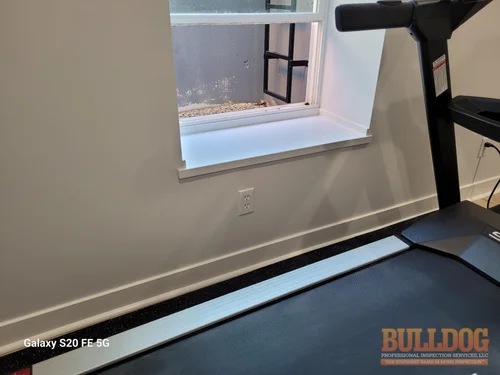
During the foundation inspection of an occupied 4-year-old ranch-style home in the Genesis Place at Green Hills subdivision of Kansas City, MO, MO Friday morning, I found a properly installed basement egress window well and ladder connected to a basement window.
And right away I was reminded me of all the questions I get about them.
Egress window wells serve a critical life-safety function in basement bedrooms.
These below-grade window systems must provide a large enough opening for emergency escape during a fire or other emergency, and sometimes need a window well ladder or steps to allow someone to climb out from basement level to ground level.
The window itself must meet minimum size and positioning requirements to qualify the space as habitable, and when all these elements work together correctly, the basement space becomes a conforming bedroom that can be marketed and valued as legitimate living space.
Many Kansas City, MO, homeowners don’t realize that calling a basement room a “bedroom” without a proper egress window creates legal and financial problems.
If the window is too small, too high, or missing the required ladder, that space becomes a non-conforming bedroom that appraisers can’t count toward the home’s bedroom count. This directly affects property value and can create disclosure issues during the sale.
The egress window and window well ladder (when necessary) are required safety features that add even more value to the home.
Let me answer the most common questions I get about egress windows and window well ladders.
What is an egress window well?
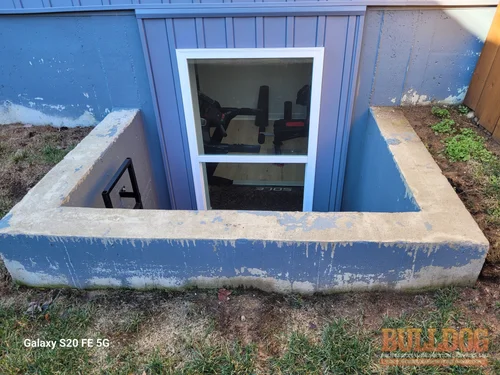
An egress window well is a reinforced excavation around a below-grade basement window designed primarily to allow firefighters with full gear to enter the home during an emergency.
The code-driven size requirements largely stem from the need for firefighters to have enough space to maneuver while wearing equipment and breathing apparatus. That’s the primary driver behind the dimensions.
The secondary benefit is that it gives occupants a way to escape if the main exits are blocked by fire or smoke.
Building codes require an egress window to have a minimum horizontal area of 9 square feet. The width and projection from the foundation wall must each measure at least 36 inches.
These dimensions are designed to accommodate a firefighter in full gear climbing down into the space or an adult climbing out through the window opening.
The well itself is the protective barrier that holds back soil and prevents erosion around the window.
You’ll find them made from:
- Galvanized steel
- Plastic
- Concrete
- Fiberglass
Steel wells typically run $400-$800 before installation. Plastic or composite versions usually cost $600-$1,600.
Kansas City, MO’s building codes follow the International Residential Code for egress requirements. Any basement room used as a living space or a bedroom must have at least one properly sized egress window for code compliance.
If the well depth exceeds 44 inches from bottom to top, building codes require a permanently attached window well ladder or steps.
The ladder must have rungs at least 12 inches wide, project a minimum of 3 inches from the wall, and have no more than 18 inches of vertical spacing between rungs. The ladder can encroach up to 6 inches into the required well dimensions.
Regular windows are just for letting light into basements.
An egress window is engineered specifically for life safety. The difference lies in the size, structure, and code-compliance requirements that enable emergency access.
What is an egress ladder?
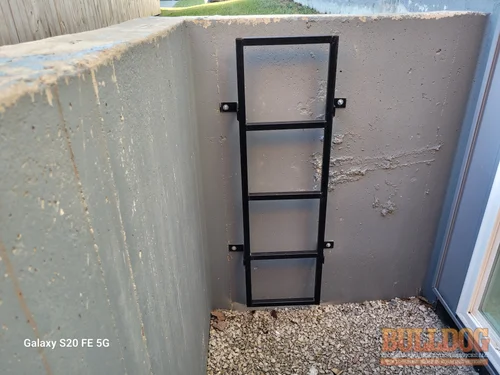
An egress ladder (or window well ladder) is a permanently attached ladder inside a window well that provides safe access in and out when the well depth exceeds 44 inches from bottom to top.
Building codes requires window well ladders when a window well is deeper than 44 inches, the typical depth that’s too high for most people to climb out unaided in an emergency.
But this window well ladder serves a dual purpose: It helps firefighters descend into the well to access the egress window while also giving occupants a way to climb up and out through the opening.
The International Residential Code sets specific requirements for window well ladder construction.
The ladder rungs must be at least 12 inches wide.
Each rung must project at least 3 inches from the well wall. This gives you enough space to get a solid foothold without your toes hitting the wall.
The vertical spacing between rungs can’t exceed 18 inches on center. Closer spacing is fine, but wider gaps can make the ladder harder to climb, especially for children or shorter adults.
The ladder can encroach up to 6 inches into the window well’s required dimensions. That may reduce the usable space in the well, but building codes account for this in the minimum 9-square-foot well size requirement.
Kansas City, MO follows these IRC ladder requirements for basement egress installations.
Most window well ladders get fabricated from galvanized steel or aluminum. Steel ladders typically run $50-$150, depending on the number of rungs needed. Some fiberglass egress window well systems come with integrated ladders molded directly into the well structure.
The “permanently attached” requirement generally means you can’t just drop a portable ladder into the well. The ladder must be bolted or welded to the well structure so it stays in place during an emergency and can support the weight of an adult in full firefighter gear.
How big does a window well have to be for egress in Kansas City, MO?
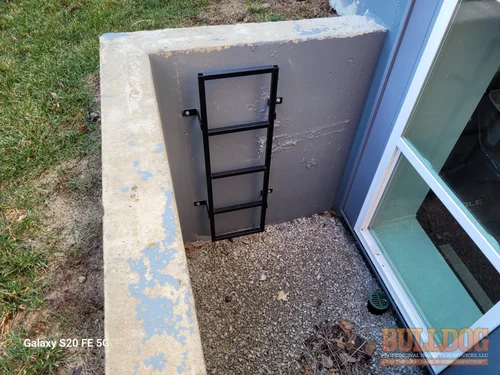
A window well must have a minimum horizontal area of 9 square feet, with both the width and projection measuring at least 36 inches each in Kansas City, MO.
Kansas City, MO, follows the International Residential Code for egress window well requirements.
The 9-square-foot minimum provides enough space for a firefighter wearing full gear and breathing apparatus to maneuver into the well and access the window. That’s largely the primary reason behind the size requirement.
The dimensions also help accommodate an adult climbing out through the opening during an emergency.
The 36-inch minimum applies to both measurements.
Width runs parallel to your foundation wall. Projection measures how far the well extends out from the house into your yard.
Code doesn’t allow you to compensate for a narrow well by making it deeper, or vice versa.
Both dimensions must meet the 36-inch minimum regardless of the well’s overall area.
The well must allow the egress window to open fully without obstruction.
If you install a casement window that swings outward, the well needs to be deep enough that the open window doesn’t hit the back wall.
Window well depth typically creates an additional requirement.
If the depth exceeds 44 inches from bottom to top, you must install a permanently attached window well ladder or steps. The ladder itself can encroach up to 6 inches into the required well dimensions.
Kansas City, MO building inspectors verify these measurements during final inspection before issuing occupancy permits for finished basements with bedrooms or living spaces.
The egress window size requirements generally apply to any basement room used for sleeping or living.
A basement used only for storage or mechanical equipment typically doesn’t require an egress window.
Standard prefabricated egress window wells usually measure 42 to 64 inches wide with projections ranging from 36 to 48 inches. These meet code requirements while providing extra working space beyond the minimums.
What is the difference between a window well and an egress window well?
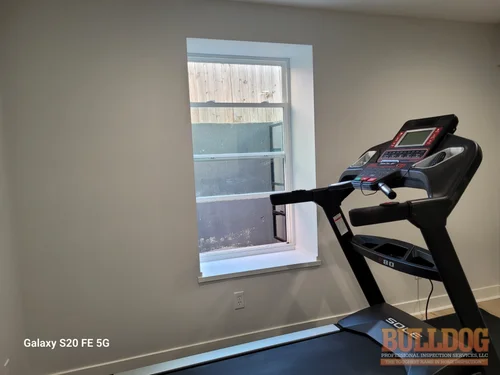
The main difference is that a regular window well is designed solely to let light and air into your basement, while an egress window well is engineered for emergency escape and firefighter access.
Regular window wells can be any size that keeps soil away from the window.
You’ll typically find them around small basement windows measuring 24 inches wide or less. These wells often measure just 12 to 18 inches in projection with minimal depth.
They primarily serve one purpose: creating a barrier between the window and the surrounding dirt.
An egress window must meet specific size requirements set by building codes.
The minimum dimensions are 9 square feet of horizontal area, with both width and projection measuring at least 36 inches each.
These larger dimensions generally accommodate a firefighter wearing full gear and breathing apparatus as they climb into the well, or an occupant climbing out during an emergency.
Depth requirements differ significantly between the two types.
A standard window well can be shallow – just deep enough to expose the window. Egress window well depth typically depends on how far below grade your egress window is. If that depth exceeds 44 inches, you must install a permanently attached window well ladder or steps.
Kansas City, MO building codes only require egress windows for basement rooms used as living spaces or bedrooms.
A basement used solely for storage or mechanical equipment generally doesn’t need an egress window.
Regular window wells can work fine in these situations, since emergency access isn’t typically required by code.
Construction materials overlap between the two types.
You’ll find both regular and egress window wells made from:
- Galvanized steel
- Plastic
- Fiberglass
- Concrete
The difference often shows up in the structural reinforcement.
Egress window wells usually feature heavier-gauge materials and stronger bracing to handle the larger dimensions and support long-term stability.
Cost reflects the size difference. Regular window wells typically run $100-$300 installed.
Egress window well systems usually cost $400-$800 for the well alone, before adding excavation, installation labor, window costs, and potential ladder requirements.
The permit and inspection requirements differ, too. Installing a regular window well around an existing basement window generally doesn’t require a building permit in most jurisdictions.
Adding an egress window well as part of finishing a basement bedroom typically triggers permit requirements and final inspection before occupancy approval.
How much does an egress window well cost in Kansas City, MO?
In Kansas City, MO, the average cost to install a complete egress window well system typically falls between $2,500 and $6,000, with most homeowners spending around $4,000 to $5,000.
The total cost typically depends heavily on several factors.
Window size can significantly affect the price.
Larger egress windows usually cost more both for the window itself and the larger well needed to accommodate it.
Material choice influences cost variations.
Steel window wells typically run $400 to $800 before installation. Plastic or composite wells usually cost $600 to $1,600.
Concrete wells can cost more depending on custom fabrication requirements.
Excavation is often a major expense on Kansas City, MO projects.
Professional excavation generally costs $3,000 to $7,000, depending on soil conditions, depth requirements, and site accessibility. Kansas City, MO’s clay soil can make excavation more challenging in some areas, potentially increasing labor time and costs.
The window itself also adds to the total.
Egress-compliant windows typically run $150 to $700, depending on type and size. Casement windows often cost more than sliding styles but usually provide better clear opening dimensions for code compliance.
Installation labor varies by contractor and project complexity.
Most contractors in the Kansas City, MO area charge $1,500 to $3,000 for labor on a standard installation. This typically includes cutting the foundation, installing the window, setting the well, and backfilling.
Permits typically add $50 to $300 to your total in most Kansas City, MO metro jurisdictions.
Building inspectors usually require permits for egress window well installations as part of basement finishing projects. The permit cost generally covers plan review and final inspection.
Window well ladders become necessary when the depth exceeds 44 inches.
Steel or aluminum ladders typically run $50 to $150, depending on the number of rungs needed. Some prefabricated egress window well systems include integrated ladders in the base price.
Waterproofing and drainage can add $500 to $1,500 to the project.
Proper drainage usually prevents water from pooling in the well and potentially leaking into your basement. Most contractors in Kansas City, MO, include basic drainage as part of their installation package.
Concrete cutting can affect the price when working with poured concrete foundations.
Cutting through concrete generally costs more than working with concrete block foundations. The thicker the foundation wall, the more time and specialized equipment the job typically requires.
DIY excavation can reduce costs significantly.
If you dig the hole yourself but hire professionals for the foundation cut and installation, total costs often drop to around $3,300. However, improper excavation depth or width can create drainage problems or code compliance issues.
The Kansas City, MO climate doesn’t significantly affect material costs compared to other regions, but freeze-thaw cycles can influence material selection recommendations.
Fiberglass and plastic wells typically handle temperature fluctuations better than some concrete installations.
Getting multiple quotes from licensed contractors in the Kansas City, MO metro usually reveals a price range of $1,000 to $2,000 between the lowest and highest bids for an identical scope.
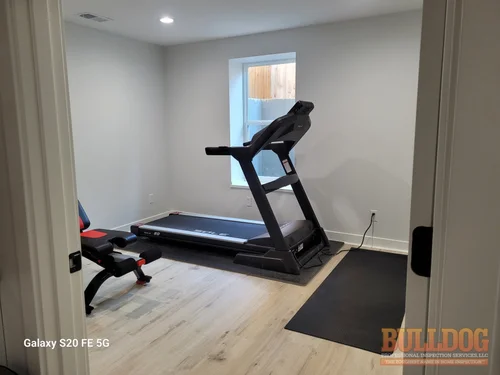
This textbook egress window well and ladder installation gave the buyers some serious peace of mind.
They understood what it meant and appreciated that installing the window, window well, and ladder combination made their basement bedroom fully conforming rather than non-conforming.
Egress window wells are one of those basement features that homeowners either take for granted, ignore, miss, or misunderstand completely.
The size requirements, ladder specifications, and bedroom conformity rules can be confusing when you’re finishing a basement or shopping for a new home in Kansas City, MO.
This is just another reason a thorough home inspection is important for every home. It checks your basement windows and lets you know if an egress window well meets building standards, or explains the issue if it doesn’t.
Either way, understanding egress window well requirements before you buy helps you avoid disappointment about bedroom count, property value, expensive retrofits down the road, and unpleasant surprises when it’s your turn to sell.
About the Author
Steve Rodriguez is a professional home inspector and the owner of Bulldog Professional Inspection Services. He performs more than 600 home inspections annually, all across the KC metro area.
Based in: Raymore, MO
Service Areas: Belton, Raymore, Harrisonville, Grandview, Lee’s Summit, Blue Springs, Raytown, Independence, Liberty, Kansas City, MO, Kansas City, KS, Olathe, Leawood, Overland Park, Prairie Village, Shawnee, Lenexa
Certifications: Certified Master Inspector® (CMI). International Association of Certified Home Inspectors (InterNACHI) Certified Professional Inspector since 2004.
This article is based on a real inspection conducted in January 2026. The property address has been excluded for privacy. Cost estimates reflect Kansas City, MO metro area pricing as of January 2026 and may vary based on specific conditions and contractor selection.
Helpful Links
- Check out our GBP post about this lesson
- Recent inspections in Kansas City, MO
- Home inspection lessons found in other Kansas City, MO homes
- Learn more about your foundation system in the Kansas City, MO area
Schedule Your Home Inspection
Call: (816) 564-3081
Email: info@bulldoginspect.com
Schedule Your Inspection Online