A master home inspector’s personal journal of copper drain pipes in a Blue Springs home, with expectations and cost implications.

During the plumbing inspection of a 66-year-old raised ranch in the Plaza Estates subdivision of Blue Springs, MO last Thursday afternoon, I found copper drain lines throughout the home.
This caught my eye because most homes use cast iron or plastic for waste lines, but this one had copper drain pipes running from every fixture to the main stack (which was also copper). Copper drain pipes only showed up for a brief window in the 1960s (which makes it easy to roughly know the age of a home without actually knowing itsage).
Homes began transitioning away from copper for drain, waste, and vent (DWV) piping during the 1980s and 1990s, with PVC and ABS plastic piping becoming the standard by the 1990s.
Why Homes Transitioned Away from Copper Drain pipes:
- Cost and Labor: Copper prices rose significantly, making it less economical than PVC or ABS, which are also lightweight and easier to install.
- Corrosion and Pinhole Leaks: Despite being durable, copper pipes can suffer from pinhole leaks over time due to water pH levels and corrosion, particularly in older systems.
- Advancements in Plastic: PVC and ABS offered a cheaper, rust-resistant alternative with a long lifespan, making them the new standard for modern plumbing.
While copper peaked in popularity as a “gold standard” for water pipes during the 1970s, it was quickly replaced by plastics for drainage applications, though it is still used today for water supply lines.
To help explain, here are the 5 most commonly asked questions about copper drain pipes by home shoppers, homeowners, real estate agents, and real estate investors.
How long do copper drain pipes last?
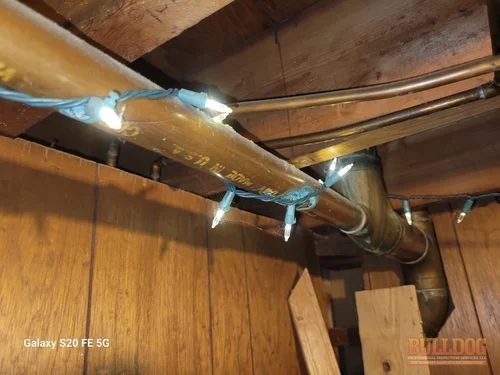
Copper drain pipes last between 50 and 70 years on average. This makes them a very durable, though uncommon, choice for moving waste out of a home.
In the older neighborhoods of Blue Springs, MO, many of these systems are reaching the end of their expected life, yet many still work perfectly.
The long life of copper plumbing is impressive because these pipes handle household waste and soapy water that can be tough on metal. When you find these lines today, you are looking at a 50-year-old engineering choice that has stood the test of time much better than the steel pipes used during the same years.
Maintenance Factors
The lifespan of your copper plumbing depends a lot on maintenance factors, especially what has been poured down the drains.
Because these are drain lines, they can wear out on the inside from the constant flow of water and waste. In Blue Springs, MO, the minerals in the water and the types of cleaners used by past owners will decide how much life is left in the metal.
The most important maintenance tip for these pipes is actually what not to do; avoiding sharp metal cleaning tools that can scratch the inside of the pipe is the best way to keep them in good shape.
Signs of Failure
To find the signs of failure in copper drain pipes, you have to look for very specific, small clues.
Because these pipes don’t have high pressure, they don’t usually burst open. Instead, they develop tiny holes. In a typical Blue Springs, MO basement, this looks like small, crusty, green or white spots on the bottom or the joints of the pipe.
These are “slow leaks” where the copper has thinned out. The water seeps through and dries up, leaving a mineral trail behind. This is a unique way for a pipe to fail because it gives the homeowner plenty of warning before a big leak starts.
DWV Wall Thickness
A big part of the engineering in copper plumbing is the DWV wall thickness. This metal is much thinner than the copper used for the water lines that go to your sink.
“DWV” stands for Drain-Waste-Vent. Since these pipes use gravity to move water, they don’t need the thick walls of a high-pressure pipe.
This thin design is part of what makes the system unique, but it also means the bottom of the pipe is the most likely to wear out first. Over 50 years, the running water can slowly wear down the metal, which is a specific problem for these drain systems.
Can you use Drano or chemical cleaners in copper drain lines?

You can use Drano or chemical cleaners in copper drain lines only with great care, but most experts say you should avoid them. This is because of the unique way these chemicals react with old copper plumbing.
While plastic pipes aren’t affected by these liquids, copper is a metal that reacts to chemicals. When a strong cleaner sits in a clog, it creates heat.
This heat and the chemicals together can speed up the thinning of the metal walls. In an uncommon system like this, a cheap bottle of cleaner could cause expensive damage by eating through a pipe that was otherwise fine.
Chemical Corrosion
The biggest danger to your copper plumbing from store-bought cleaners is chemical corrosion.
Most drain openers use strong acids or lye to melt hair and grease. While they clear the clog, they also eat away at the metal.
In a Blue Springs, MO home with 1960s drains, the metal is already thinner than it used to be. Using a harsh acid can strip away the dark coating inside the pipe that naturally protects it. This leaves the raw copper exposed, which can lead to “pitting” or small holes forming very quickly.
Joint Weakness
Another unique risk of using chemical cleaners is joint weakness. Copper drain pipes are held together by solder, which is a mix of metals melted into the joints.
Chemical cleaners that get very hot can put a lot of stress on these old joints. In the custom homes found in Blue Springs, MO, these joints have stayed dry for decades.
The sudden heat from a chemical reaction can make the metal expand and shrink too fast. This can cause “weeping” joints that are much harder and more expensive to fix than a simple clogged drain.
Safe Alternatives
Because of these risks, using safe alternatives is the best way to protect the copper plumbing in your home.
For homeowners and investors in Blue Springs, MO, the best way to clear a copper drain is by using a drain snake or enzymatic cleaners. Enzymatic cleaners use natural bacteria to “eat” clogs like hair and soap scum without hurting the metal.
If the clog is really stuck, a small hand-cranked snake is a much better choice. It pulls the clog out without leaving a puddle of chemicals that will slowly dissolve your pipes from the inside.
Why is my copper drain pipe turning green?

Your copper drain pipe is turning green because of a natural process called oxidation. This happens when copper is exposed to air and moisture over a long time.
In the Blue Springs, MO area, where basements can get a bit damp, seeing green or teal colors on your copper plumbing is very common.
This color is like a “skin” the metal grows to protect itself. However, the way the green looks can tell you if the pipe is just getting old or if it is actually starting to leak.
Patina vs. Pinhole Leaks
Telling the difference between a healthy patina and a pinhole leak is a great skill for any homeowner with copper drain pipes.
A light, smooth coating of dull green is called a patina. This is actually a good thing that protects the copper plumbing from the air.
But, if you see a “crusty” or “bumpy” green spot that looks like a tiny piece of dried cauliflower, that is usually a pinhole leak. This happens when a tiny bit of water seeps through the metal and dries, leaving a crust behind.
Environmental Causes
Several environmental causes can turn copper plumbing green without the pipe being broken.
In many Blue Springs, MO homes, pipes near the laundry room or in damp crawlspaces will turn green faster because there is more moisture in the air.
Also, if the pipes touch certain types of insulation or drywall, they can change color. This kind of green is just on the surface and doesn’t mean the copper drain pipes are bad. As long as the metal feels solid, the color is just cosmetic.
Residual Flux
Knowing about residual flux helps explain why many copper drain pipes turn green specifically at the joints.
When the copper plumbing was first installed, the plumber used a paste called “flux” to help the solder stick. If they didn’t wipe the extra paste off, that acid would spend the next 50 years slowly eating the outside of the pipe.
This creates a bright green ring at the joint. While it might look scary, it is often just on the outside and hasn’t actually hurt the strength of the drain line.
How do you repair a hole in a copper drain line?
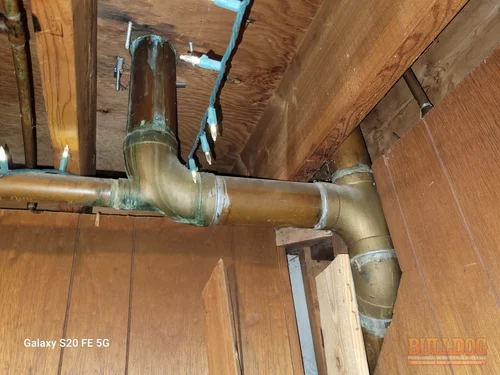
You repair a hole in a copper drain line by using a patch for a quick fix or by cutting out the bad part and replacing it with new pipe.
In many Blue Springs, MO homes, it can be hard to find someone to do old-fashioned metal repairs on copper plumbing.
Since these are drain lines and don’t have high pressure, fixing them is a bit easier than fixing a water line, but you still have to use the right methods to keep the system working correctly.
Temporary Patches
A temporary patch is a good way for a homeowner to stop a small “weeping” leak until a real repair can be done.
One of the best ways to fix copper drain pipes quickly is by using epoxy putty. You just mix the putty and press it over the clean, dry leak.
You can also use a rubber repair clamp, which is a piece of rubber held tight by a metal band. These stop the drip, but they don’t fix the thin metal inside the copper plumbing, so they aren’t a permanent solution.
PVC Transitions
A PVC transition is the best modern way to fix copper drain pipes. This allows you to replace a bad section without having to tear out the whole system.
In Blue Springs, MO, a plumber will usually cut out the part of the copper that has holes. Then, they put in a new piece of plastic PVC pipe.
They connect the two different materials using a rubber sleeve called a “Fernco” coupling. This creates a solid, leak-proof bridge between the old copper plumbing and the new plastic.
Soldering Risks
You should know the soldering risks if you or a plumber decide to use a torch on old copper drain pipes.
Unlike water pipes, drain lines can have sewer gases trapped inside. Using a flame near these gases in a Blue Springs, MO basement can be dangerous.
Also, because the copper in these systems is thin, it is very easy to get it too hot. This can melt the old solder in nearby joints and cause more leaks. This is why many people now use rubber couplings instead of a torch to fix these pipes.
Is copper better than PVC for drain lines?
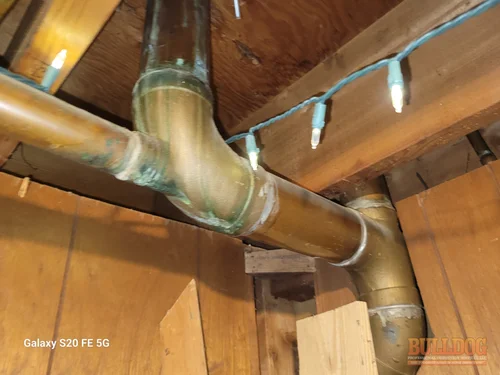
Copper is better than PVC for drain lines when it comes to blocking noise and resisting fire, but PVC is now more common because it is cheaper and won’t rust or corrode.
In the custom homes of Blue Springs, MO, architects often chose copper plumbing because it was a high-quality material that worked very quietly.
While you don’t see it often in new houses today, copper is still a top-tier choice for people who want a strong and silent drain system.
Sound Insulation
The great sound insulation of copper drain pipes is something homeowners really appreciate.
Because copper is a heavy, solid metal, it soaks up the noise and vibrations of rushing water. In a nice Blue Springs, MO home, this means you won’t hear a loud “whoosh” every time someone flushes a toilet.
PVC pipes are made of thin plastic and tend to be much noisier. To make plastic pipes as quiet as copper plumbing, you usually have to wrap them in thick, expensive foam.
Acid Resistance
When looking at acid resistance, PVC has the advantage over copper drain pipes.
Many things we use today, like dishwasher soap or citrus cleaners, are slightly acidic. Over many years, these acids can slowly eat away at the inside of a metal pipe.
This is what causes the thinning found in old copper plumbing. PVC is a type of plastic that doesn’t react to these acids at all. For a real estate investor in Blue Springs, MO who wants a pipe that will never corrode, PVC is a very practical choice.
Fire Rating
The fire rating of copper plumbing is an important safety feature.
Copper will not burn or melt into a puddle of chemicals during a fire. In many big buildings and high-end homes in Blue Springs, MO, copper is still used because it doesn’t give off toxic smoke if it gets hot.
This fire-safe nature makes copper drain pipes a very high-quality material. It adds an extra layer of protection to the home that modern plastic pipes just cannot provide.

Seeing a full system of copper drain pipes in a Blue Springs, MO home is a unique look at a time when homes were built with very high-quality materials. While these systems need a little extra care as they age, they offer a level of quiet and fire safety that is hard to find today.
Whether you are a homeowner taking care of your pipes or an agent explaining them to a buyer, knowing how copper plumbing works helps keep these uncommon systems running for years to come.
About the Author
Steve Rodriguez is a professional home inspector and the owner of Bulldog Professional Inspection Services. He performs more than 600 home inspections annually all across the KC metro area.
Based in: Raymore, MO
Service Areas: Belton, Raymore, Harrisonville, Grandview, Lee’s Summit, Blue Springs, Raytown, Independence, Liberty, Kansas City, MO, Kansas City, KS, Olathe, Leawood, Overland Park, Prairie Village, Shawnee, Lenexa
Certifications: Certified Master Inspector® (CMI). International Association of Certified Home Inspectors (InterNACHI) Certified Professional Inspector since 2004.
This article is based on a real inspection conducted in January 2026. The property address has been excluded for privacy. Cost estimates reflect Kansas City metro area pricing as of January 2026 and may vary based on specific conditions and contractor selection.
Helpful Links
- Check out our GBP post about this lesson
- Recent inspections in Blue Springs, MO
- Home inspection lessons found in other Blue Springs, MO homes
- Learn more about your plumbing system in the Blue Springs area
Schedule Your Home Inspection
Call: (816) 564-3081
Email: info@bulldoginspect.com
Schedule Your Inspection Online