A home inspector’s guide to detecting slow plumbing leaks in vacant Kansas City homes through continuous water flow testing, with real repair timelines and costs.
Wednesday morning during the plumbing inspection of a vacant 54-year-old ranch in Kansas City’s Coach Light Square subdivision, I ran water through every fixture the entire time I was inside the home.
My inspection process goes from top to bottom, so by the time I reached the garage, the master shower drain was actively leaking onto the floor.
This leak would not have been found if the water had not been turned on and running long enough to expose it.
The Problem with Hidden Shower Drain Leaks in Vacant Properties
The master shower drain connection was failing, allowing water to escape through the drain assembly and drip down to the garage ceiling below.
Since the property was vacant, there was no way to know how long this leak had existed or how much damage it had already caused to the ceiling materials and garage structure.
In Kansas City’s aging housing stock, I find hidden plumbing leaks in approximately 30% of vacant homes over 50 years old.
The issue is more common in vacant properties because homeowners aren’t using the plumbing daily to notice slow leaks, drainage problems, or fixture failures.
This isn’t a problem that reveals itself during a quick walk-through.
It’s a hidden defect that only appears under sustained water flow conditions that simulate actual use.
Understanding Hidden Plumbing Leaks: What They Are and Why They Happen
A hidden plumbing leak occurs when water escapes from pipes, drains, or fixture connections in locations you cannot easily see during normal use.
These leaks happen behind walls, above ceilings, under floors, or in crawlspaces where water can drip, pool, or saturate building materials without creating obvious visible signs.
Gas-fired water heaters, shower drains, supply line connections, and drain assemblies all contain components that can fail over time from wear, corrosion, or improper installation.
Hidden plumbing leaks happen when seals deteriorate, connections loosen, pipes corrode, or drain assemblies crack from age and stress.
Common causes include worn rubber gaskets at shower drain connections, corroded metal drain pipes, loose pipe fittings, failed caulking around fixtures, and thermal expansion that stresses rigid connections.
In Kansas City ranch homes built in the 1960s and 1970s, I frequently see this in properties where original plumbing components are reaching 50-60 years of age.
The progression is gradual but persistent.
Initially, leaks may only drip when water flows through the fixture, stopping completely when the fixture is turned off.
Over months, the leak worsens as connections continue to deteriorate and openings in drain assemblies widen from water erosion.
Eventually, the leak becomes continuous during any water use, creating moisture damage that compounds with each shower, bath, or sink use.
How to Identify Hidden Plumbing Leaks in Your Home: 6 Warning Signs
You don’t need to be a home inspector to spot the early warning signs of hidden plumbing leaks.
Here’s what to watch for in ranch homes, especially those built before 1980:
- Water stains on ceilings directly below bathrooms or kitchens. These brownish or yellowish discolorations indicate water has been escaping from above and saturating ceiling materials over time.
- Musty odors in basements, crawlspaces, or garages beneath bathrooms. This smell indicates moisture has been present long enough for mold or mildew to develop on building materials.
- Soft or spongy spots in floors around tubs, showers, or toilets. When subfloor materials absorb water from leaks above, they lose structural integrity and feel unstable when you step on them.
- Peeling paint or bubbling wallpaper on walls adjacent to plumbing fixtures. Moisture escaping through walls from hidden leaks causes paint and wallpaper adhesive to fail and separate from drywall.
- Visible mold growth in corners of rooms below bathrooms or near plumbing walls. Black, green, or white mold colonies appear when moisture levels stay elevated from persistent leaking.
- Unexplained increases in water bills when usage hasn’t changed. A slow leak that drips continuously wastes hundreds of gallons monthly, creating noticeable spikes in water costs.
Check these areas quarterly if you own a ranch (or any style) home with bathrooms on upper levels or over finished spaces.
Turn on bathroom fixtures and let water run for 10-15 minutes while you inspect spaces directly below for moisture, staining, or active dripping.
If you smell musty odors, see staining, or notice soft spots in floors, call a licensed plumber immediately for leak detection and evaluation.
What I Found in Coach Light Square, Kansas City: A Case Study
The home had been vacant for approximately three months when the real estate investor scheduled the inspection.
The seller provided no disclosure information about plumbing repairs or known issues.
I was going into this inspection blind, not knowing what I would find.
When I arrived Wednesday morning, I confirmed the water was turned on at the street and flowing through fixtures before beginning my inspection.
I turned on all faucets to full flow, then adjusted each to a steady trickle before moving to the next room.
This creates sustained water flow through drain systems without risk of overflow from unattended fixtures running at full volume.
By the time I completed the roof, HVAC, and electrical inspections and reached the garage, I had been inside the home for approximately 90 minutes.
The master bathroom shower had been trickling that entire time.
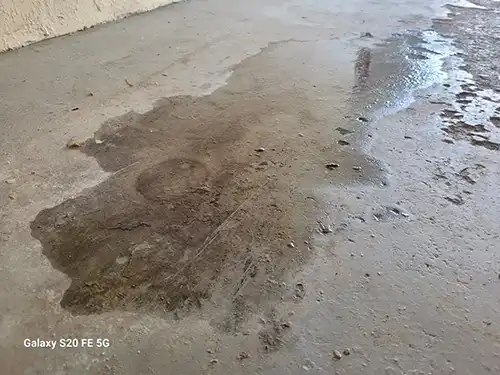
In the garage, I found water actively dripping from the ceiling directly below the master bathroom.
The drip rate was slow but steady, about one drop every three to four seconds.
I traced the location back to the master shower drain position above and went back upstairs to investigate the connection.
The shower drain assembly showed no visible cracks or damage from above, but the connection between the drain body and the shower pan was where water was escaping.
I documented the leak with video showing the active dripping in the garage and the shower running above.
The moisture staining on the garage ceiling indicated this leak had been occurring for some time, though the extent wasn’t severe enough to cause ceiling collapse or major structural damage yet.
The Financial Reality of Hidden Plumbing Leak Repairs: What It Actually Costs
Cost Breakdown
Repairing shower drain leaks in the Kansas City area typically costs between $300 and $1,500 depending on the cause and accessibility.
Simple fixes run $300-500 and include resealing drain connections, replacing rubber gaskets, or tightening loose drain assemblies.
These address situations where the drain body is sound but the seal between the drain and shower pan has failed.
Moderate repairs cost $800-1,200 when drain assemblies need complete replacement, shower pans require resealing, or ceiling materials below need replacement from water damage.
This includes plumber labor, materials, and any necessary drywall or paint work on damaged ceilings.
Major corrections run $1,500-3,000 when shower pans are cracked and need replacement, floor joists below have rotted from prolonged moisture exposure, or mold remediation is required in wall cavities.
At this level, you’re dealing with structural repairs beyond simple plumbing fixes.
Kansas City-specific costs include $75-150 for city permits when structural repairs are involved and $200-300 for follow-up inspections.
Timeline for repairs ranges from same-day service for simple reseal work to 3-5 days for shower pan replacement and ceiling restoration.
What Happens If You Ignore It?
Months 1-3: Water continues dripping during every shower use.
- Ceiling materials below absorb moisture and begin to soften.
- You might notice increased humidity in the garage or basement below the bathroom.
- The moisture staining spreads as water saturates more ceiling area.
- Cost to repair at this stage: still $300-500 for drain reseal before ceiling damage becomes extensive.
Months 3-12: Chronic moisture exposure causes drywall to deteriorate and paint to peel on garage or basement ceilings.
- Mold begins growing on ceiling materials and wall cavities where moisture has spread.
- Wood framing around the drain opening shows signs of rot as it remains damp between shower uses.
- Cost to repair: $800-1,200 as ceiling replacement and mold treatment are now required in addition to drain repair.
Years 1-2: The shower pan cracks from stress at the drain connection.
- Ceiling materials collapse from water saturation.
- Floor joists below the shower show structural rot and require replacement or reinforcement.
- You’re now facing emergency conditions where the bathroom floor becomes unsafe and ceiling collapse creates hazards in the space below.
- Cost to repair: $1,500-3,000 for complete shower pan replacement, structural framing repair, mold remediation, and ceiling reconstruction.
The person buying this Coach Light Square ranch caught it during inspection before any structural damage occurred.
Had they closed without addressing it, they would have faced continued water damage with every shower use, escalating repair costs as ceiling and framing deterioration progressed.
Why This Matters in the Kansas City Area
The KC metro’s housing stock includes thousands of ranch homes built between 1960 and 1980 with bathrooms positioned over garages, basements, or crawlspaces.
During this construction era, shower drain assemblies used rubber gaskets and metal drain bodies that were designed to last 30-40 years under normal use conditions.
Most of these homes are now 45-65 years old, placing original plumbing components well beyond their intended service life.
Our climate makes hidden leak detection more challenging during vacant periods.
Kansas City’s temperature swings create expansion and contraction in building materials that stress rigid drain connections.
Our humid summers keep moisture levels elevated in enclosed spaces like garages and basements, which can mask early signs of water intrusion from leaks above.
In subdivisions like Coach Light Square (Kansas City), Blue Hills (Independence), and Sunset Acres (Raytown), I consistently find hidden plumbing leaks in vacant ranch homes with original bathroom fixtures and drain assemblies.
It’s a predictable pattern driven by component age and the lack of daily use that would reveal these problems to occupants before they cause significant damage.
What You Should Do
For Homebuyers
If you’re buying a vacant ranch home in Kansas City built before 1980, add these requirements to your inspection process:
Verify water is turned on before the inspection begins.
If the seller says water is unavailable, reschedule the inspection or require the seller to turn water on at their expense before you proceed.
Ask your inspector these specific questions:
- “Will you run water continuously during the entire inspection?”
- “How long will fixtures be running to test for slow leaks?”
- “Can you check all accessible spaces below bathrooms for moisture or staining?”
Don’t assume your inspector will run water for extended periods.
Many inspectors only test fixtures for basic function without sustained flow testing.
If hidden leaks are found, get quotes from licensed plumbers before negotiating.
Costs vary significantly based on whether you need simple resealing ($300-500) or complete shower pan replacement ($1,500-3,000).
Use the highest reasonable quote to negotiate a repair credit at closing or request repairs be completed before closing.
Walk away if the seller refuses to address plumbing leaks and you’re not prepared to handle immediate repairs after moving in.
Water damage compounds quickly, and delaying repairs increases costs substantially.
For Homeowners
If you own a ranch (or any style) home with bathrooms over garages or basements, inspect quarterly for hidden leak warning signs.
Run shower water for 15-20 minutes while checking spaces directly below for moisture, dripping, or staining.
Look for musty odors, soft ceiling spots, or discoloration that indicates water is escaping from drain connections above.
Install moisture alarms in garages or basements below bathrooms.
These inexpensive devices alert you when water appears where it shouldn’t, catching leaks before extensive damage occurs.
Schedule professional plumbing inspections every 3-5 years if your home is 40+ years old with original fixtures.
Licensed plumbers can pressure-test drain systems and identify failing seals before they create ceiling damage.
Budget $300-800 for preventive drain reseal work on aging shower assemblies.
Replacing gaskets and resealing connections before leaks start costs far less than repairing water damage after leaks have been active for months.
For Sellers
Pre-listing inspections with sustained water flow testing reveal hidden leaks before buyers find them during their inspection.
You control the repair timeline, choose your contractor, and complete work on your schedule instead of during negotiation deadlines.
Addressing plumbing leaks before listing prevents last-minute repair negotiations that can delay or kill sales.
Homes with recent plumbing documentation and leak-free certifications sell faster and for higher prices than comparable homes with deferred maintenance.
If you can’t afford repairs, disclose everything and price accordingly.
Buyers will find hidden leaks during thorough inspections anyway, and non-disclosure creates legal liability if problems appear after closing.
Transparency with appropriate pricing maintains buyer trust and prevents deal collapse during inspection negotiations.
What Happened Next: The Resolution
The buyer of this property made a data-driven decision based on the inspection findings.
After receiving my report with video documentation of the active leak, she negotiated with the seller to have a licensed plumber diagnose the source and complete all necessary repairs before closing.
The seller agreed to hire a plumber within 48 hours and provide repair documentation before the closing date.
The plumber confirmed the shower drain seal had failed and water was escaping at the connection between the drain body and shower pan.
The repair included removing the drain assembly, cleaning the shower pan opening, installing a new rubber gasket, resealing the drain connection with plumber’s putty, and testing the repair with sustained water flow.
Total repair cost: $425, completed in one service call.
The plumber ran water through the shower for 30 minutes after completing the repair and confirmed no leaking appeared in the garage below.
The new buyer plans to close on schedule with confidence that the plumbing leak had been properly addressed before she took ownership.
She avoided the hassle of coordinating repairs herself and eliminated the risk of discovering additional water damage after moving in.
The Bigger Picture
Hidden plumbing leaks in Kansas City ranch homes aren’t isolated incidents.
They’re predictable failures that happen when 50-60 year-old drain assemblies and fixture connections reach the end of their designed service life.
I’ve inspected nearly 600 homes in the Kansas City metro area in the past year.
I find some level of hidden plumbing leaks in approximately 60% of all vacant homes.
This percentage will increase as these homes continue aging and original plumbing components deteriorate further from decades of use and exposure to water.
Understanding this pattern helps buyers negotiate fairly based on actual repair costs rather than fear of unknown problems.
It helps sellers prepare their properties realistically before listing instead of facing surprised buyers during inspection negotiations.
And it helps homeowners plan for proactive maintenance on aging plumbing systems before small leaks become major water damage events.
If you’re buying a ranch home built before 1980 with bathrooms over finished spaces, budget for plumbing leak detection and potential drain seal repairs even if your inspection doesn’t find active leaking.
It’s $300-500 of preventive spending that protects your investment and prevents thousands in water damage repair costs down the road.
About the Author
Based in: Raymore, MO.
Service Areas: Belton, Raymore, Harrisonville, Grandview, Lee’s Summit, Blue Springs, Raytown, Independence, Liberty, Kansas City, MO, Kansas City, KS, Olathe, Leawood, Overland Park, Prairie Village, Shawnee, Lenexa
Certifications: Certified Master Inspector (CMI). International Association of Certified Home Inspectors (InterNACHI) Certified Professional Inspector since 2004.
This article is based on a real inspection conducted in November 2024. The property address has been excluded for privacy. Cost estimates reflect Kansas City metro area pricing as of November 2024 and may vary based on specific conditions and contractor selection.
Helpful Links
- Check out our GBP post about this lesson
- Learn more about our home inspection services
- Recent inspections in Kansas City, MO
- Home inspection lessons found in other Kansas City, MO homes
Schedule Your Home Inspection
Call: (816) 564-3081
Email: info@bulldoginspect.com
Schedule Online